Posts by Christine

Christine's avatar

Grandma’s Yellow Rose

Nacogdoches Yellow Rose, April 22, 2014

Nacogdoches Yellow Rose, April 22, 2014

Grandma’s yellow rose is a found rose — from Nacogdoches, Texas, so it’s also called “Nacogdoches Yellow”.

I purchased two of them last year at the Antique Rose Emporium. They are both growing and have started blooming. This one (pictured above) has just a few more blooms and is just a little bit larger than the other one.

So far, these roses have good disease resistance (few issues with blackspot, but nothing major and nothing else so far) and the blooms start early here in USDA zone 8b.

Christine's avatar

Spring Colors of Rose Leaves

After Spring pruning, roses emerge with brilliant colored leaves preceding the rose flowers. My favorite? Valentine’s display of deep maroon-purple leaves that fade to khaki green followed by the final darker green color.

A few others:

  • 7-Sisters — new leaves are lime green with dark green veins and a very soft, fluffy texture; over time, inter-vein spaces darken to match the veins, the texture becomes more leathery and the texture flattens.
  • Livin’ Easy — new leaves are significantly more shiny than others in the garden; the new leaves have a touch of bronze that fades to reveal the bright green followed by a darker green without the shiny surface
  • Iceberg, Climbing — new leaves are bronze, then transition to khaki green, followed by a darker green over time.

Leaf color clearly announces that Spring has arrived and flowers will be here soon!


Christine's avatar

British Gardening in a WWI Germany

When WWI broke out in Germany after the assassination of the Austrian Archduke Ferdinand of Austria (June 18, 1914), the Germans imprisoned all British men between the ages of 17 and 55—who could potentially become soldiers for England.  Trapped in Germany for 4 years, the men in one camp—the Ruhleben camp—began growing ornamental plants, then vegetables and having gardening competitions.

  • Read more about the Ruhleben camp internees and view photos reported on the Telegraph website.
  • View historical information and maps of the camp—a converted race track—from the Harvard website


Resources:

Ruhleben:  The WWI Camp where gardening blossomed. http://www.telegraph.co.uk/gardening/10606906/Ruhleben-the-WW1-camp-where-gardening-blossomed.html (Telegraph article accessed March 31, 2014)

Ruhleben:  A Digital Exhibit  http://library.law.harvard.edu/digitalexhibits/ruhleben/exhibits/show/ruhleben/camp-layout/camp-maps (accessed March 31, 2014)

Christine's avatar

Perennial Bed is Ready for Spring!

Perennial Bed--Oct. 27, 2013

Perennial Bed–Oct. 27, 2013

Last year was the conclusion of about a 3 year period where I failed to clean up weeds and grass in the perennial bed, and the end of about a 5 year period in which I did not divide the daylilies. As a consequence, the entire bed was a huge grassy mess (picture at left, from October, 2013) with extra large clumps of daylilies with fewer and fewer blooms each year. Continue reading

Christine's avatar

White Iris with 3 Blooms.

White Iris with three flowers

Hardy white Iris with three flowers!

This “cemetery white” iris —  Iris x Albicans — has 3 flowers on one stalk (see arrows). Normally, there is only one iris per stalk. I suspect this has something to do with the brutal winter we’ve had in this area (as well as the entire country). These irises generally bloom in mass, but the temperature dropped to 21 just as the buds were setting — all existing buds were destroyed. Damaged brown foliage below the flowers is further evidence of the sub-freezing weather.

This Iris is often referred to as “cemetery white” due to it’s prominence in cemeteries. An extremely hardy Iris, it is one of the first plants to bloom in Spring, and it remains green throughout the summer, preferring dry roots (plant health declines when water sets on the roots). It is an extremely drought tolerant and water-friendly Iris.

When the blooms appear after the last frost/freeze, this Iris puts on quite a show!

Christine's avatar

Fresh Mulch on the Onions — Check!

Freshly Mulched Onions, Mar. 22, 2014

Freshly Mulched Onions, Mar. 22, 2014

Over the weekend, weeds were removed from among the onions and mulch was added. Despite several days of well below freezing temperatures over the past four weeks, these onions look pretty healthy above ground!

Onions generally need 100 to 120 days from planting to harvesting. These were planted from seed onions on February 1, 2014 (read blog post).  We’ll start watching for signs of maturity for harvesting in Mid-May.

Onions are ready to harvest when the base of the green stalk bends and the thin green leaves are lying on the ground (pictures of maturity for harvest will be provided in an updated post at harvesting).

Christine's avatar

Peach Blossoms!

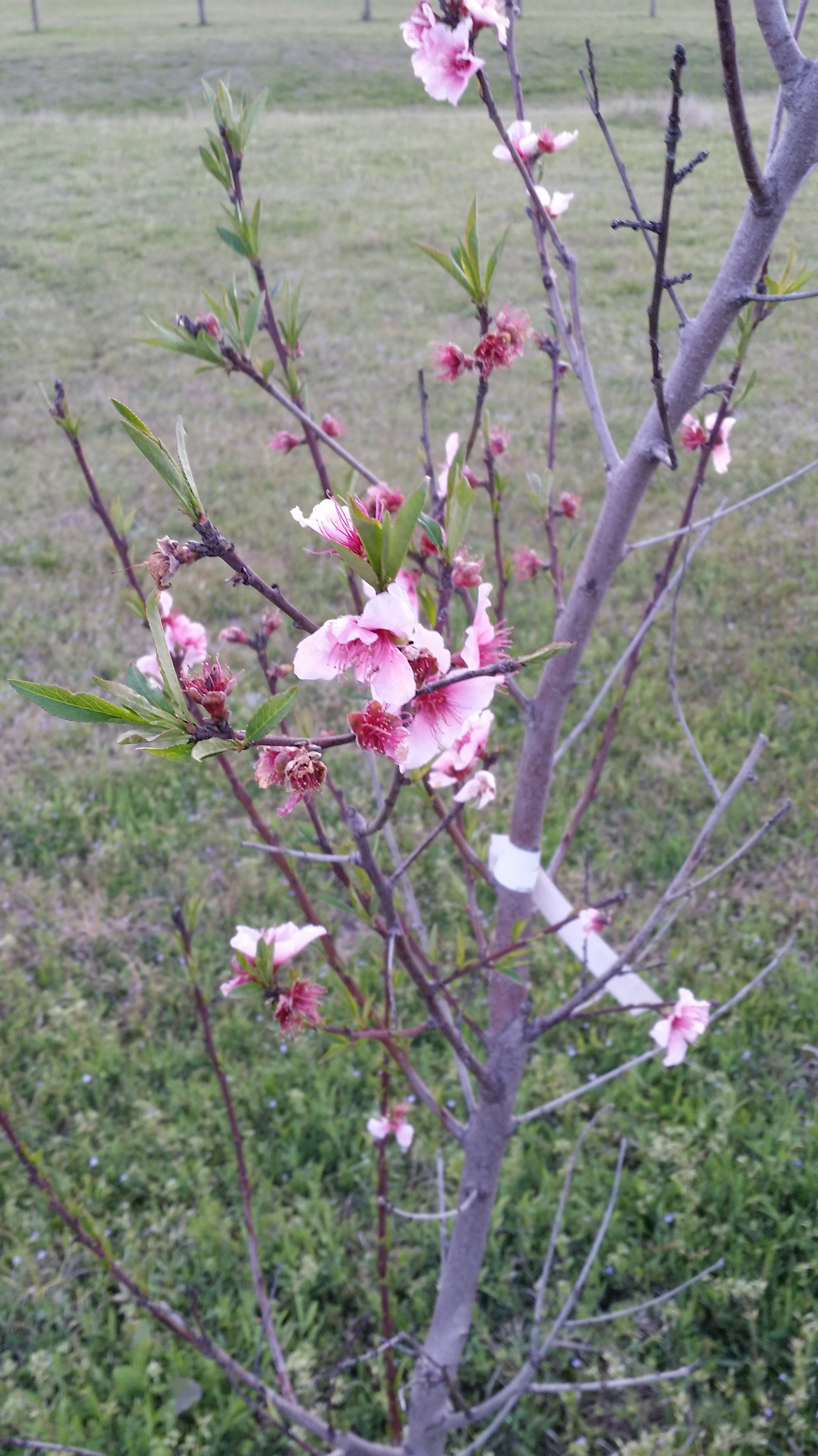
Diamond Princess Peach Tree Blossoms

Diamond Princess Peach Tree Blossoms, Mar. 2014

We’ve got quite a few peach blossoms this year–hopefully each one will end up as fruit! This peach variety is “Diamond Princess”. Although purchased at a local garden center, this tree is not well suited for this geographic area. Here are a few lessons I’ve learned–very recently–that will help me select a tree for next year.

If you want to successfully grow peaches, you’ll need to do a bit of homework first. Here are a few suggestions. Continue reading

Christine's avatar

Narcissus on the First Day of Spring

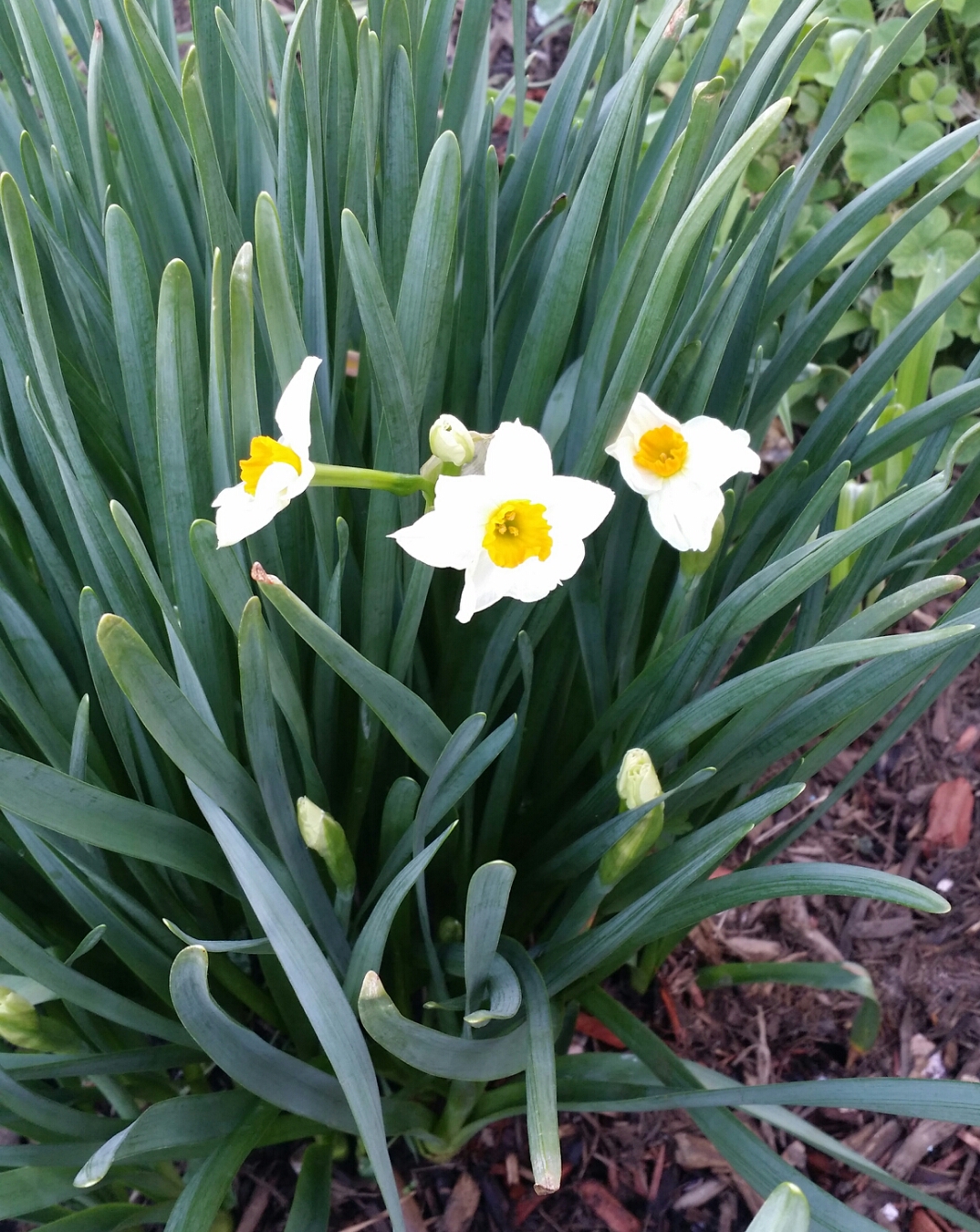
2014-03-20 narcissus

Narcissus, first day of Spring, 2014

This daffodil — most likely Narcissus x golden dawn — has happily revealed its first flowers on this first day of Spring.

This clump of daffodils began as 3 or 4 bulbs planted in 2006; so these bulbs have not only survived the drought, heat, and the winter of 2014, but they have proliferated greatly!

We have very few daffodils that tolerate the summer heat during dormancy. I’m certainly glad to see these gems in the perennial bed!

Christine's avatar

Start Gladiolas Early

Much going on in the garden now!

Gladiolas make wonderful cut flowers in May and June, but wind, frost, and excessive moisture can cause problems growing these gems!
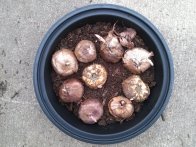
gladiola bulbs in takeout food container

gladiola bulbs in takeout food container

While there are some native gladiolas for this area, I like to have a little more color, so I start mixed color gladiola bulbs early — in takeout food dishes that have been washed.

Here are the steps:

(1) place about 1 inch of potting soil into the plastic dish.

(2) inspect gladiola bulbs; add those with emerging plant material (stems and leaves)
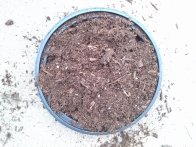
gladiola bulbs, just covered

gladiola bulbs, just covered

(3) Add just enough potting soil to cover the bulbs — there may be some emerging plant material above the soil.

(4) water until the potting soil is damp, but not too wet (if pooled water is visible — it’s too wet — drain the excess water. Watch for the protruding plant material to turn green.

Rather than tossing those plastic takeout dishes, save them for starting gladiolas — or other bulbs!

I’ve also used the long, shallow tubs sold for wallpapering (at home improvement stores). They are relatively cheap and you can put quite a few bulbs in them.
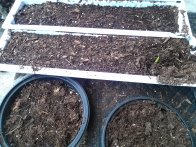
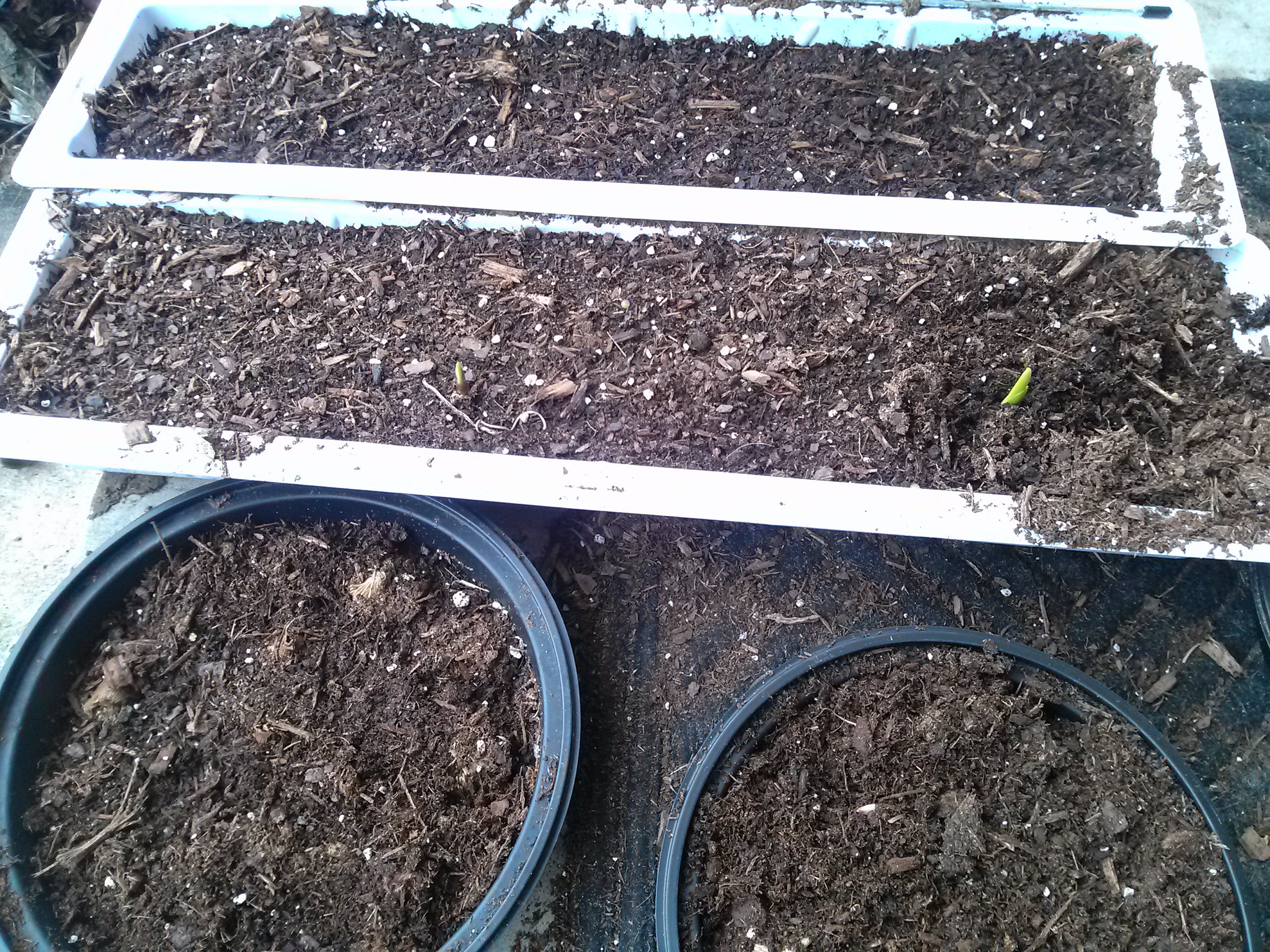
gladiola plants emerging

gladiola plants emerging

After about 10 days, the gladiolas have emerged (see long wallpapering container to the left).  The transition from off white to green is a great sign! Wait until all danger of frost has passed, then either transplant the bulbs to pots (space plants according to instructions on the box — e.g., 3 inches apart) for fresh picked, long life gladiola flowers in May and June. 

Some bulbs may not survive — it always happens that way — no worries, take care of those that do emerge and you’ll have wonderful flowers for late spring or early summer.

Finally — the plants may need support stakes to keep them from falling over.

Enjoy the glads!

 PS —- Once finished with the containers, wash and store them for next year. You won’t have to buy containers and these won’t end up in the landfill after a single use!