

Double Orange Daylily—June 13, 2013
This double orange daylily was obtained from my mother-in-law’s yard. I have seen this double feature become available only recently in commercial greenhouses. Continue reading

Double Orange Daylily—June 13, 2013
This double orange daylily was obtained from my mother-in-law’s yard. I have seen this double feature become available only recently in commercial greenhouses. Continue reading

Spider lilies have a spider guest
My Spider lilies generally bloom when the high temperatures near 90 and low temperatures are about 70. For this area of Texas, that can happen anywhere from early April through June — this year has resulted in a later than usual bloom for my plants.
Closer inspection of the picture — area in red rectangle — reveals that the lilies have a spider guest. I just had to take this picture!
My landscape includes spider lilies near areas that are shady in the afternoon and evening. Those lilies that were growing in the less shady areas did not survive the drought over the last few years. These receive drip irrigation when the temperature rises and rains stop.
The last few days have been great — highs in the low 90’s and lows in the low to mid 70’s. We have been visited by a rather slow moving, light rain producing low pressure area trapped between two high pressure regions. Rain in July is rare!

Valentine Rose–May 2013
Valentine is a floribunda shrub rose. This rose blooms spring through summer as long as the high temperatures are not above 100 degrees Fahrenheit for more than 10 days or so.
Valentine is an “old garden rose”; the plant above ground and the roots are a single plant. A grafted rose, on the other hand, is a rose that consists of two roses grafted together at the crown (found at soil line). Long stem roses are often grafted roses because they generally have weak root systems.
Old garden roses can be propagated using cuttings (pieces of stem inserted into the ground—in a suitable environment). This rose was purchased at the Antique Rose Emporium in Brenham, Texas. If you’d like to see other varieties—check the online catalog at https://www.antiqueroseemporium.com/.
Valentine was purchased last year and has had several flushes of blooms—characteristic of the floribunda class. So far this year, we’ve had about 7 days above 100 degrees and Valentine continues to bloom, but each subsequent set of blooms is smaller in size and number. Valentine is a small shrub (about 2 1/2 feet in diameter) and a repeat bloomer!
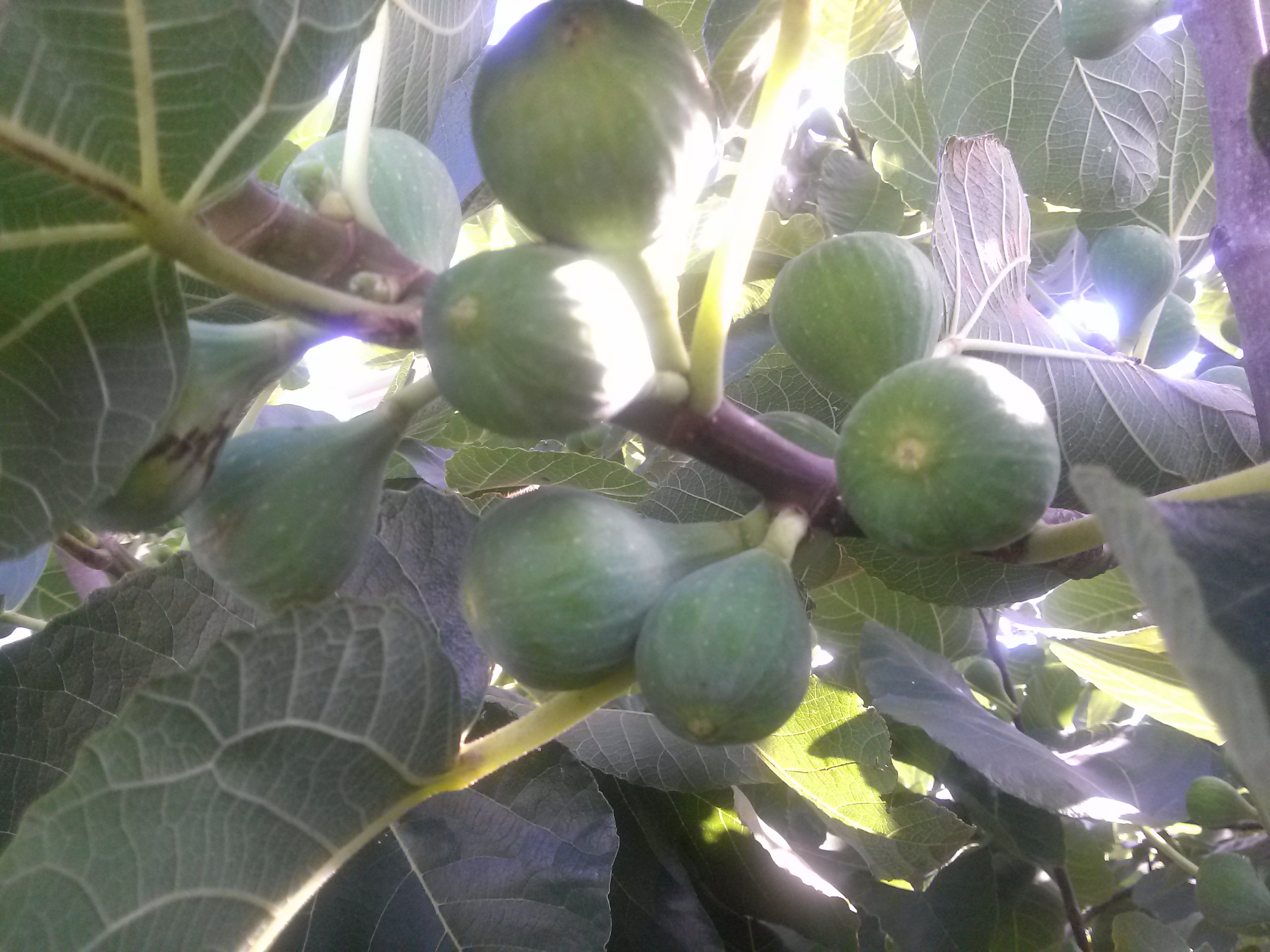
Figs–June 17, 2013
Figs grow pretty well in Texas Heat as long as they are watered well. This picture was taken June 17, 2013 — 3 weeks ago — and the first large batch will be ripe by the end of this week.
Figs can be used to make jelly or jam, and they freeze quite well. The frozen figs have a popcicle-like texture, they don’t form large chunks of ice. The frozen figs make great summer treats, and they are loaded with macro-nutrients as well.
The variety of Fig in this picture is “Alma”.
After a relatively cool weather break (highs mid 90’s, lows upper 60’s) for the last week, we are headed for triple digits. It will probably be about 2 or 3 days of high 90’s, with 100 degrees for a high on Thursday or Friday.
There has been some rain showers in the area over the last few days, one was even substantial — nearly 3 inches—but none where we needed it. To keep the trees from dying, we set up the drip hoses for the summer. (We also use the drip hoses in the Fall/Winter during extremely dry periods.)
This morning, July 2, 2013 – in Central Texas – it was a cool 64° outside at 6 AM. This is an unusual turn in the weather pattern as we generally start out around 72° or higher in July. The high-pressure has shifted west and has taken the heat with it. Our high today is projected to be 91°, that’s lower than the low temperatures being experienced in the Western United States.
The slightly cooler temperatures provide a break for plants in the garden; however, most of the plants are quite stressed now – after four days of triple digit temperatures. This change in weather events is good for us because it means that we probably won’t lose any trees this year. Over the last three years of drought, we have lost three small trees but have saved the larger trees through drip irrigation.
This break in weather should also encourage a few more blooms from the roses, so I’ll be posting pictures of that as they become available. The temperatures are not expected to return to triple digits for at least the next seven days – almost unheard of in Central Texas in the summer!

Ornamental plants can both decorate our landscape and serve a purpose. This picture–taken March 21, 2013– illustrates my point perfectly! This year the environment provided optimum conditions for beautiful Spring color!
Each of these trees provides shade and a privacy screen. Ages are; redbud (7 years), oak (6 years), Arizona Cypress (5 years). Each Spring provides a beautiful compliment of colors–in Summer, the redbuds are leafed out (green), and the oak leaves fade, and the arizona cypress fades slightly.
(The wood pile is from an oak that died in the drought.)
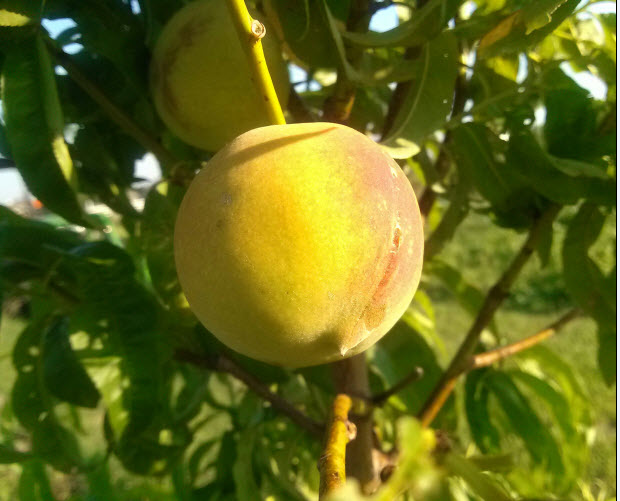
Peaches, June 13, 2013
The peaches are just about ready to pick. This year, we planted two trees in April. The trees had already leafed out and bloomed shortly after planting. Over the course of the May frosts, about half of the peaches were destroyed, five survived.
Peaches can be eaten fresh, frozen, or canned. The fresh peaches don’t last long — only a week or two–so if I have a lot of them, I will can them in jars because they last longer than frozen (I’ve used peaches up to 2 years after canning). Add peaches (fresh or canned, or any fruit) to Greek non-fat yogurt for a healthy breakfast with a variety of macronutrients AND low calorie!
We have entered the season of heat in Texas. In central Texas, we are fortunate as we have not yet reached the triple digits! The last few years have brought 100+ degree temperatures as early as April. Another oddity this year was three frosts and 12 inches of rain in the month of May (a bit late for frost, but the rain was good.)
As the high temperatures stay above 95, the gardens become stressed; growth and produce decrease significantly. Okra and peas (black-eyed peas and cream peas) continue to make in the heat as long as the produce is picked as soon as it is ripe (pictures soon!). Temperatures generally remain in the upper 90’s, up to about 105—although a summer temperature of 114 is not unheard of!
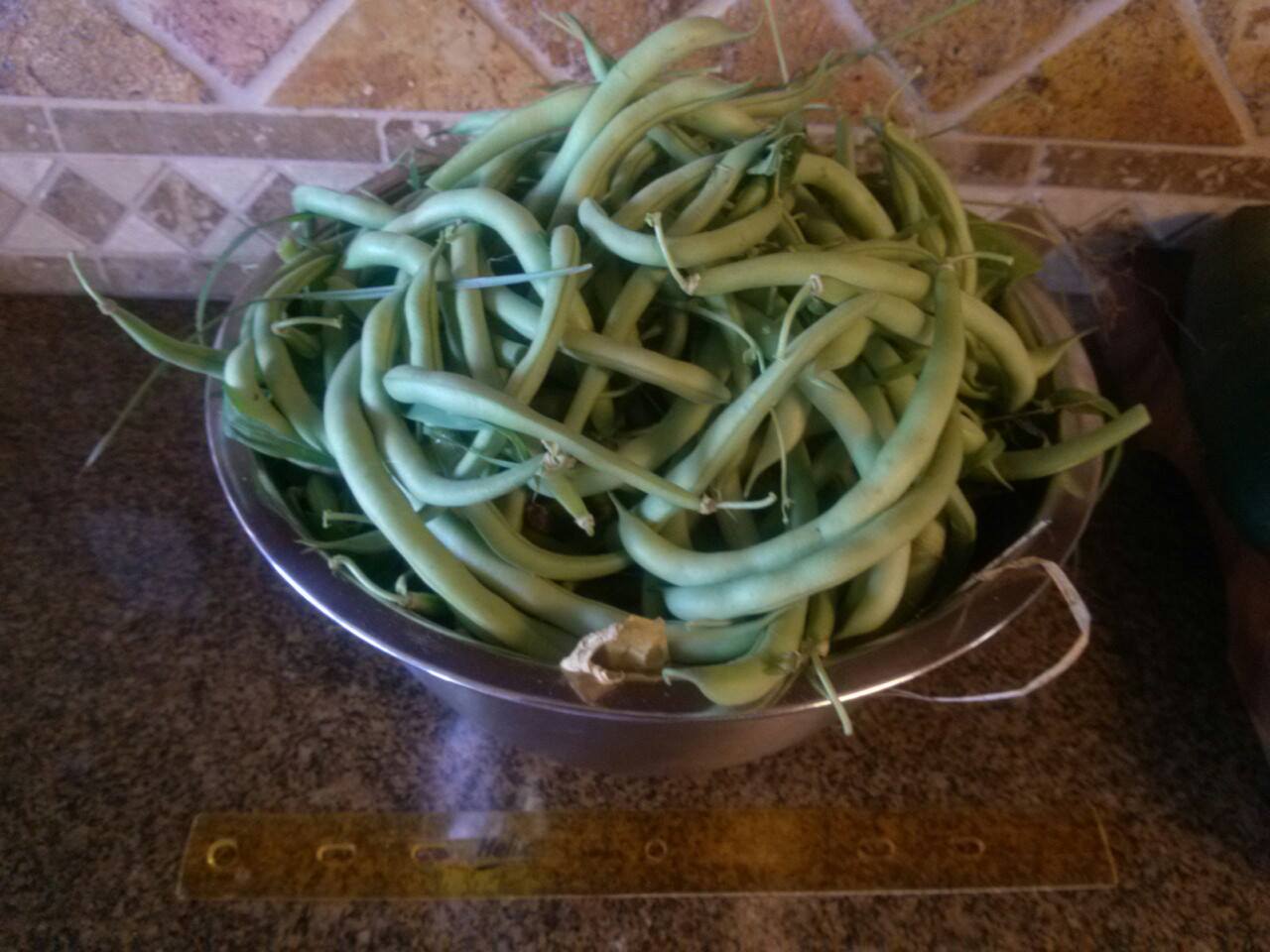
These green beans were picked on May 31, 2013. Green beans can be grown as either Spring or Fall garden vegetables; the Fall garden often produces more than the Spring garden–once the heat of late Spring arrives, the plants will die back. Last Fall we covered the plants with a tarp for Frosts and Freezes through November. The deer love green beans and will carefully pick all ripe beans–we keep green beans close to the house with a fenced yard and it has worked so far. During the drought, however, the deer came into the yard to forage acorns and other green plants. As the beans mature, pick them and the plants will continue to add new ones.
Once picked, soak the beans in water for 30-45 minutes, then drain the water, put them in a small colander and store in the refrigerator for at least a week. The beans can also be frozen. Five steps to freezing; 1) Snap the ends off the beans (and cut to desired size), 2) blanch with hot water (I drop them in a pot of boiling water, wait 30 seconds, then drain in a colander in sink), 3) place beans on a cookie sheet and cool about 10 minutes, 4) place cookie sheet of beans in the freezer about 30 minutes, and 5) place frozen beans in freezer bags—the beans won’t stick together and you can select however many desired and store the rest.


 The Art & Science of Gardening