Posts by Christine

Christine's avatar

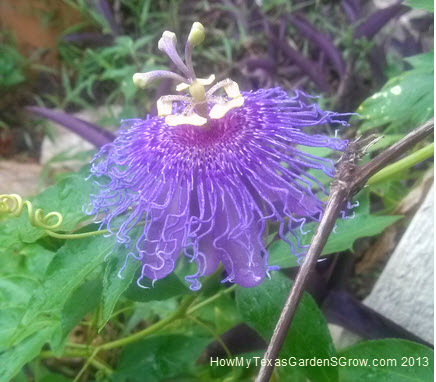
Passion Vine

Passion vine flower with purple petals

Passion Vine Flower

The passion vine grows in zones 7-10 and is a native plant in the United States. There are a number of colors, mine is purple but I’d love to find one of the reds!

This one was planted recently, a gift from my sister-in-law, JoAnn’s garden—her vine dies back in the winter (but not completely) and it is grown in partial shade. JoAnn found several seedlings near the mature vine, so it’s probably not a hybrid and I plan to try growing it from seed next Spring.

I’ve got this one growing near the house on the East side and so far it has defied the heat with about 2 feet of growth and 4 flowers so far–there were an additional 6 flower buds when I checked this morning. The Flowers last a day each, so it’s good to see additional buds.

I’ll keep watch on this one to share more growing tips.

Christine's avatar

Livin’ Easy—old garden rose

Livin’ Easy is an old garden floribunda, shrub rose that reaches a mature size of about 4 feet tall and up to 4 feet wide, if space allows. I sometimes call this the “sunset” rose because the newly opened blooms exhibit all the colors of a beautiful sunset!
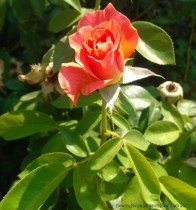
Picture of orange colored, newly opened bloom of Livin' Easy rose

Livin’ Easy, Aug 10, 2013

Pros and Cons observed in my garden.

There are pros and cons about this rose. My favorite parts about this rose are; easy to grow, thrives in full afternoon sun—even blooms in 100 degree heat, very disease resistant (although I have seen downy mildew on the leaves), and the bright green leaves compliment the multiple colors of the rose.

The biggest problem I have with this rose is the very dense set of thorns that reach about 1/2 inch long and completely surround the canes—-I don’t work on this one without a good pair of  gloves made to shield hands from rose thorns!

Growning conditions in my garden.

Roses really like to have garden spaces that receive morning sun to dry the leaves and prevent diseases. If a rose is highly susceptible to black spot (a common fungal disease), then the morning sun rule is critically important. [Note:  if a rose is susceptible to black spot leaf infections, that may be enough to kill the rose as it will quickly drop leaves to get rid of diseased tissues. ]

Fully opened blossom of Livin' Easy rose.

Livin’ Easy, Aug 10, 2013

The Livin’ Easy rose grows on the South-West side of my house, so it receives very little morning sun, and considerable amounts of evening sun. After 3 years, this rose continues to thrive and through variances in drought and extreme moisture (Spring and Summer), so my experience has been that it is hardy enough to grow anywhere. (I had one on the East side that died during the drought, but it was planted farther away from the house and received less water.) A weekly watering is enough for this hardy floribunda.

Additional Rose Care

In the spring, after the last frost, I fertilize my roses with Miracle Grow for Roses. On February 14 (+/- a few days, depending on time available to be in the garden) I remove all dead canes and stems. This rose will naturally deadhead (remove spent blooms) but will more quickly add new blossoms if it is manually deadheaded with clippers.

This one’s easy to enjoy, and well worth the thorny canes!

Christine's avatar

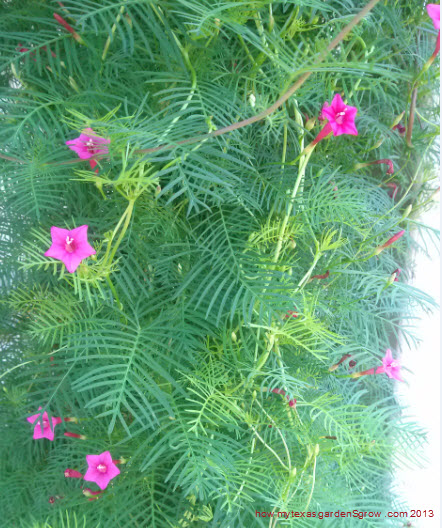
Star of Texas—Cypress Vine

The pink blooms of the Star of Texas (Cypress) vine are abundant in summer.

“Star of Texas” (Cypress Vine) Aug.10, 2013

This plant is a cypress vine (Ipomoea quamoclit) but is often called Star of Texas.

It’s my favorite vine for several reasons.

First, it grows quickly and can fill a large area in a matter of weeks, but freezes to the ground in the winter. So, it puts on a flashy eye-catching show in late summer (when most other things die back from consecutive days of temperatures 100 or greater.  I don’t like vines that take over and damage structures — something that easily happens in our mild winters! So this is an ideal vine to fill a trellis or fence—-without destroying.

Second, the flowers attract hummingbirds—a good food source for the hummingbirds, and an interesting show for people to watch! By late summer, there are few plants blooming and producing nectar for the hummingbirds, so once they find this plant, the hummingbirds will return!

The Star of Texas vine blooms profusely in the heat of summer. In fact, this vine will not even grow very well until the high temperatures are above 90 degrees and low temperatures are above 70 degrees. The blooms are about the size of a dime, can be found in pink, red or white, and behave like daylily flowers — open in the morning and last a single day.

Texas Star Vine

Texas Star

Third, it is EASY to propagate! It returns year after year without much effort on my part and I have shared both seeds and small plants with friends and family.

I first started growing this vine from a few small plants given to me by my sister-in-law —– Debbie S. In fact, the plants can be pulled up and transplanted during the heat — just put them in a pot and keep them watered.

Finally—this vine gives a beautiful show up to the first freeze—so it’s blooms and green foliage can last well into October and, occasionally, November.

Christine's avatar

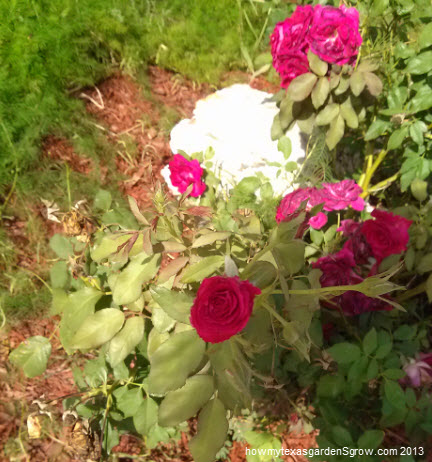
Valentine–floribunda–New Blooms Despite Heat

The Valentine rose continues to bloom despite the heat!Valentine continues to bloom, even as the heat continues to run above 100 degrees. The newly opened bloom is surrounded by new buds — all the foliage developed over the last week and every day has been above 100 degrees (102-104).

This plant was purchased and planted in February, 2013, so I wasn’t sure how well it would perform in the heat. The rose is located on the west side of the house and gets the full intensity of the afternoon sun, so it has weathered well!


Christine's avatar

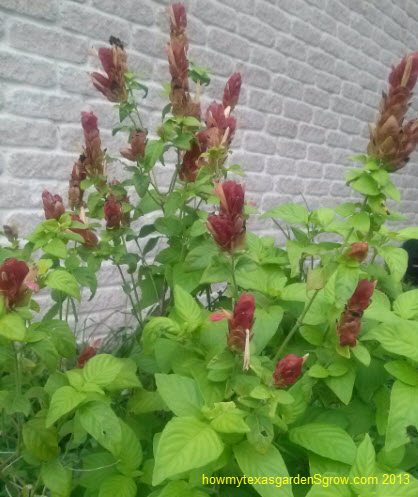
Shrimp Plant

The Shrimp Plant is native to Mexico so it will grow in hot, dry environments. In my garden, it really adds blooms as the temperature rises. This plant is one of the few in my garden that is in bloom during the “dog days” of summer — it bloomed during the drought as well.

Salmon pink and white flowers bloom throughout summer heat.

Shrimp Plant, July 27, 2013

Before 2010, I had not grown this plant so when I found it, I was curious. I purchased a plant that had a discounted price due to it’s poor condition (Of course, I saw this as a challenge!). With minimal care, this jewel returns each year and never complains about the heat–the height of it’s blooming season.   The plant is located where it receives full sun from morning until about 2:00 p.m. and is then shaded. When we fall into high temperatures no more than 90 degrees, I’m going to try to make a few cuttings so I can put additional plants elsewhere to brighten up my garden in summer!

With cool temperatures and considerable rain this spring, this plant suffered so it doesn’t like water sitting on the roots. I’ve had no other problems with it.


Christine's avatar

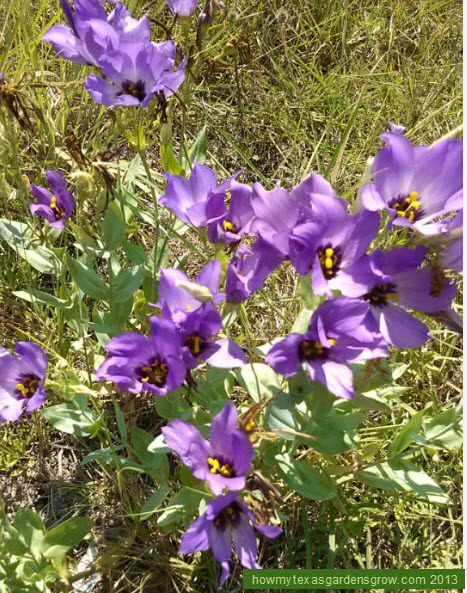
Texas Bluebell

Native Texas Bluebell

Flowers of the Texas Bluebell are abundant around Brenham, Texas, in July and August.

Texas Bluebell, August 2, 2013.

Native wildflowers provide beauty and are well-adapted to the environment where they grow. The Texas Bluebell naturally grows in prairie type soils and is well-adapted to summer heat in Texas; however, enduring winter conditions North of Texas are too harsh for the plant to return on its own (without re-seeding). Continue reading

Christine's avatar

Casualty of the Drought

Small Magnolia, Spring 2011

Small Magnolia, Spring 2011, was lost in the drought.

As the triple digit heat returns, I am reminded of a casualty of the drought —a small variety of magnolia (the label on the plant was “mock orange”, but the leaves and the flowers suggest magnolia.) The tree was planted in 2009 and thrived well into 2011.

Unfortunately, the record setting heat from summer 2011 was a bit too much for this gem! As a rule, I try to just let go of those plants that simply will not grow, but I certainly miss the abundant 3 inch blooms and fragrance that appeared each spring and stayed until about mid-summer.


Small Magnolia Variety, Spring 2011, was lost in the drought.
Christine's avatar

First Peaches Harvested!

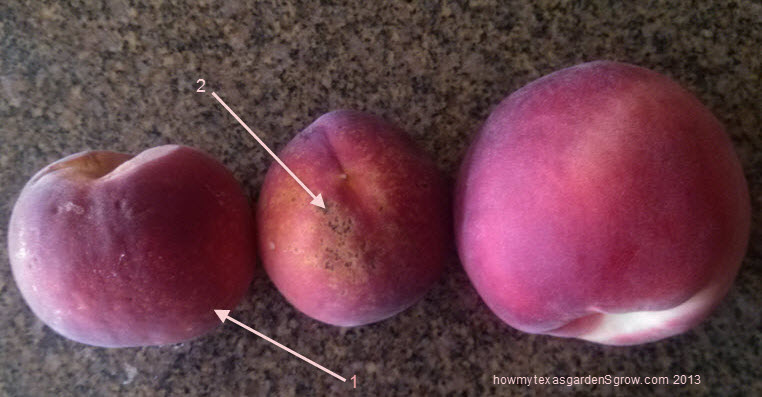
Peaches from July 10, 2013

Peaches were picked July 10, 2013

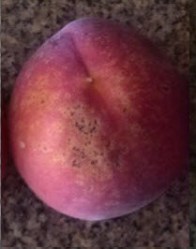
These peaches  came from two different trees The first two (left to right) were from one tree and the third one (far right) was from another tree. The first two peaches on the left are smaller and have small dark sunken spots, surrounded by yellow areas (see bottom picture for closeup). Both peach trees are the “Sweet Sue” variety and “Sweet Sue” is susceptible to bacterial infections. These spot were caused by a bacterial pathogen. The spots first appear as a round yellow areas that turn brown and collapse in the middle. As the disease progresses, the sunken areas merge.

Bacterial Spots on Peach

?This peach (left) has minimal damage at this point so it can be washed –or the spotted area can be cut out–and the peach can be eaten. Crops that are organically grown (without chemicals) often have spots and blemishes (look next time you are in the produce section at a grocery store).

How do I prevent this damage from happening?

Damage over time ruins the peach.  The best way to control this disease is to buy bacterial spot-resistant peach varieties (that should be noted on the plant information label ). Plants do not have immune systems, like humans, and a genetic system geared to help the plant resist invasion by various pathogens is the best approximation. Unfortunately, as microbes are tested by resistant varieties, those microbes may be able to overcome the plant’s resistance to disease, and a new variety of plant is developed. (If this condition is worse next year, I  will probably look for a resistant peach variety to add to the garden–until then, I’ll enjoy these!)

NOTE:  This is an ongoing war in nature. (We see the same thing in humans when antibiotics are overused and “super bugs” emerge—like the antibiotic resistance staph infections that can become deadly.)

Christine's avatar

Frozen Figs

We have been picking figs this summer since July 7. The tree has —so far— yielded about 70 pounds of figs! Freezing is a great way to have figs all year. (We finished the last of the frozen figs from summer 2012 two weeks before we picked the first summer 2013 fig!).

FIGS-july17-2013

Steps to freeze—- 1) rinse well with water (these are organically grown, no pesticides), 2) place on cookie sheet (see picture), 3) freeze at least 3 hours (I have left them on the cookie sheet overnight), and 4) put into bags for storage.

NOTE—we use vacuum-packed and sealed gallon bags, then open them and use a clip to keep the bag closed. Because the figs are frozen before packing, they will break apart easily and you can remove as many or as few as desired.

Rinse the frozen figs in a cup of warm water to soften them and they will have the texture of a Popsicle — a great treat for the hot summer months!

Freezing Figs