Posts by Christine

Christine's avatar

Prepare Daylilies for a Spring through Summer Show

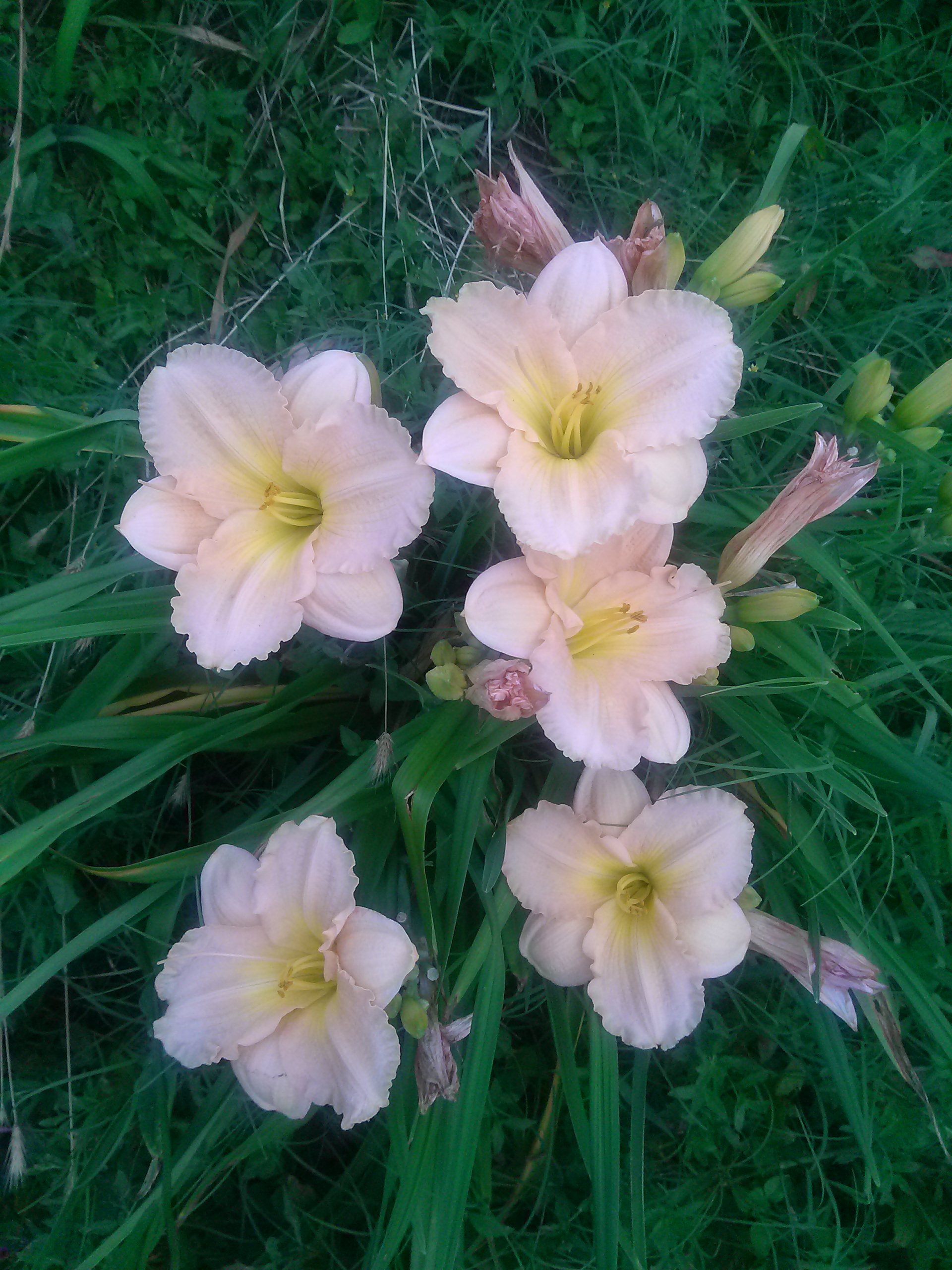
Daylily 'Fading Love'

Daylily ‘Fading Love’

My perennial garden bed is primarily composed of daylily (hemerocallis spp.) varieties. My daylily garden began in 1995, when I mail-ordered the first set of plants. After accumulating about 12 varieties, I stopped purchasing and began maintaining those already in the garden.

Over time, the daylilies form clumps that become more and more crowded — resulting in plants that produce few flowers and partially die back.

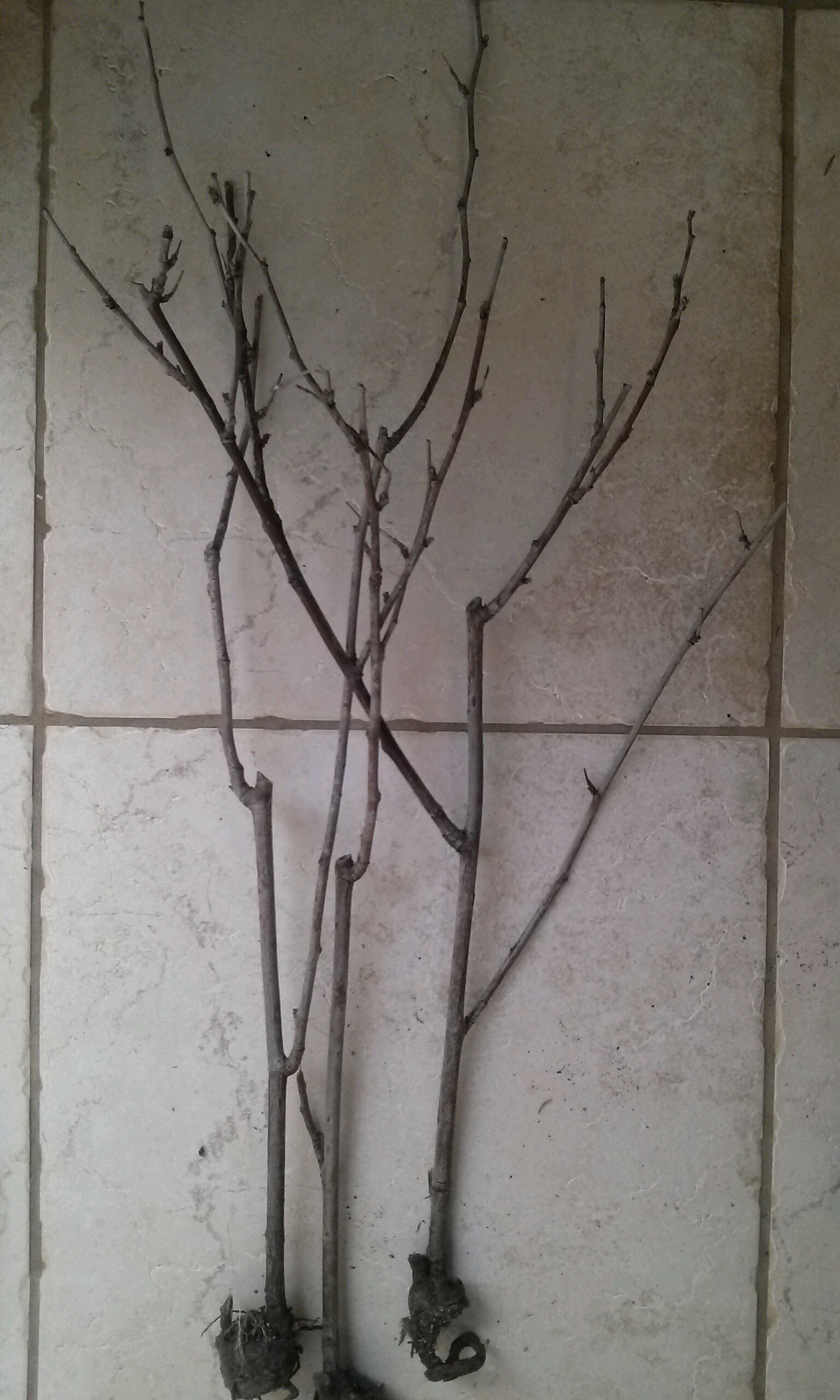
Daylily clumps should be periodically divided each year—not less than once every 3 years (depending on location and amount of growth) and then re-planted for optimum flowering and overall plant health.  Continue reading

Christine's avatar

Prune Out Damaged Rose Stems

Damage Rose Stem

Damage Rose Stem

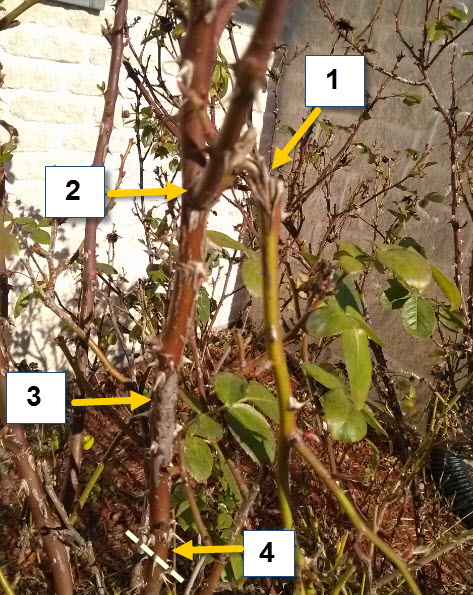
This rose has a damaged stem are that was bent and broken (see #1) by falling debris when the roof was replaced on the house. The stem can be traced to a branched area (see #2).

Farther down the stem is a large region  (#3) that demonstrates some kind of mechanical damage (hail hit the stem, or two stems may have been wind blown against each other). At any rate, both areas (#1 & #3) need to be pruned out of the rose; this can be done with a single diagonal cut (#4).

Once the cut is made, check if the inside of the stem is white; if not, continue cutting on a diagonal until healthy white tissue is observed. If the stem has damage even further down, it may need to be removed with a rose saw (large stem diameters are difficult to cut with pruning shears).

Christine's avatar

Time to Prune Roses …

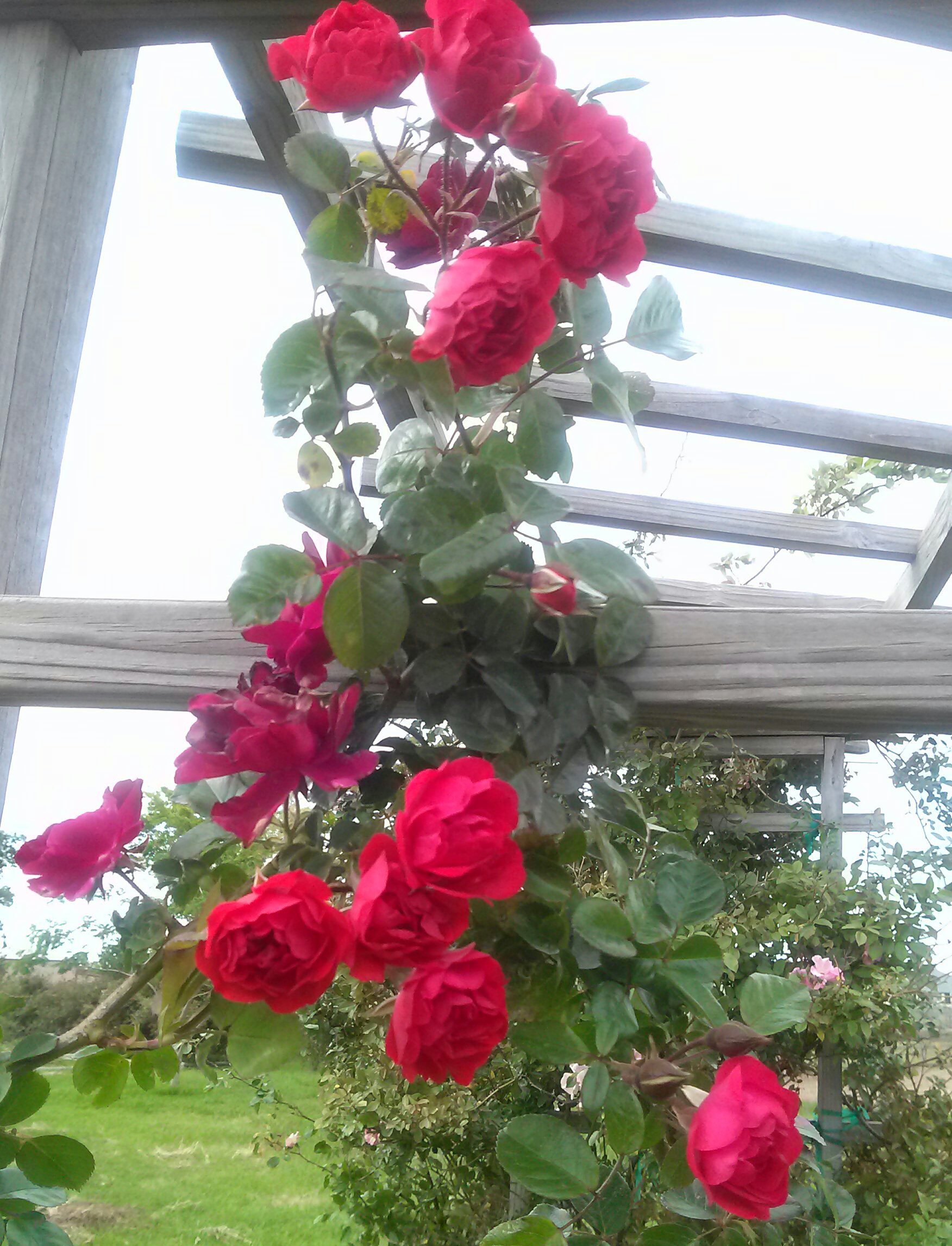
'Livin' Easy' Rose

‘Livin’ Easy’ Rose

In this area (zone 8b) it is time to prune roses around Valentine’s Day. I did not prune last year so I’ve got some overgrown roses. All of my roses are “heirloom” or “antique” or “old garden” roses — I do not have grafted roses because they do not survive as well as the heirlooms and there are so many beautiful heirlooms now that it is easy to find a rose you like that will grow in your garden. Continue reading

Christine's avatar

Spring Prep ….

Hand Tools for Gardening

Hand Tools for Gardening

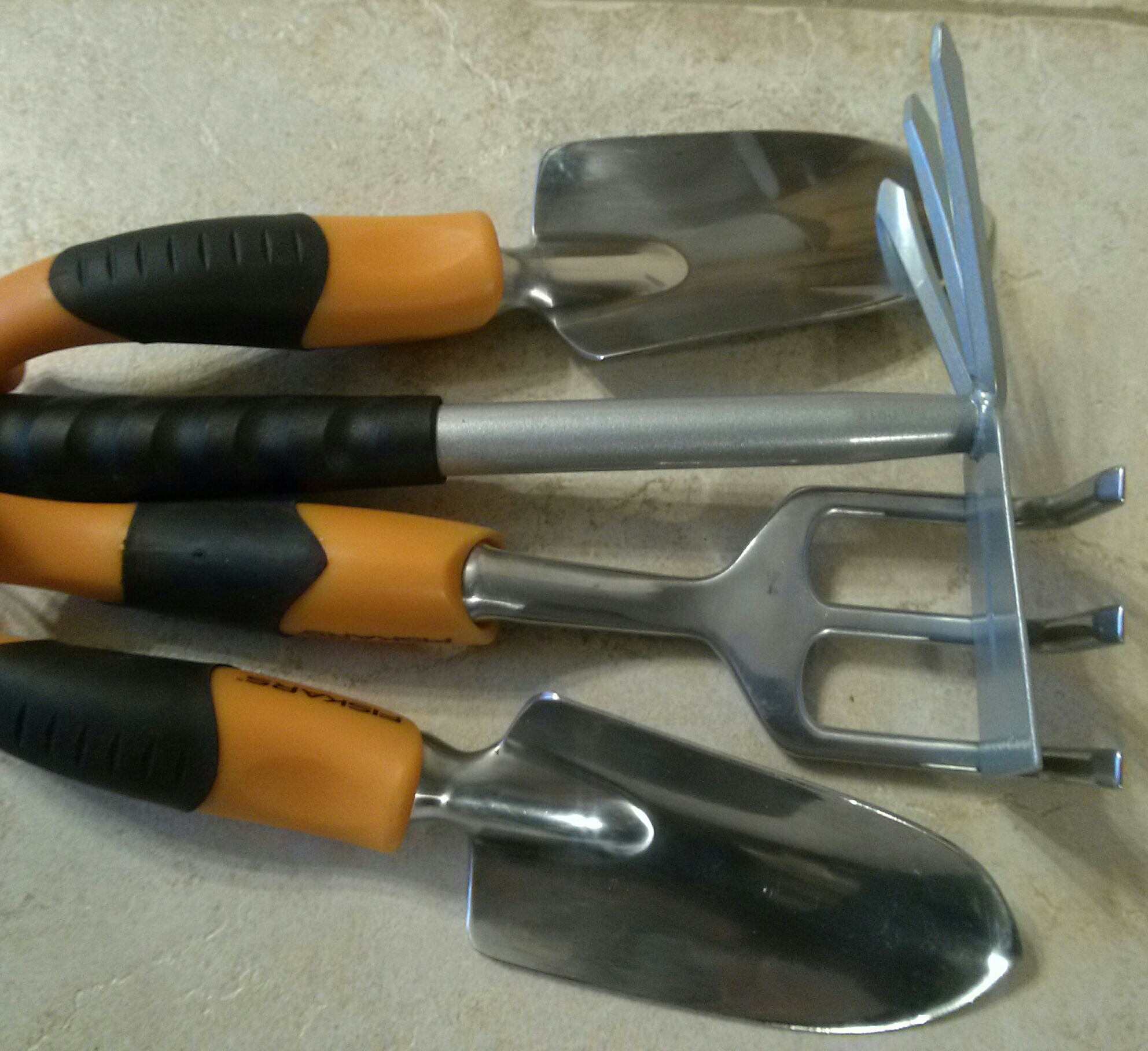
Now’s the time to pick up a set of hand tools if you need them. Gardeners will be out in mass as soon as the temperatures become milder and the notion of an approaching Spring becomes more reality than dream. It’s also time to check if cutting and shearing tools need sharpening.

Here’s a few tasks on my Valentine’s Day “to do” list (USDA zones 8-10):

  • prune roses (purchase, or get cutting tools sharpened, if needed)
  • plant potatoes
  • find and purchase mulch
  • find desired bulbs for Spring and Summer (they sell quickly!)
  • have soil tested
  • get garden plans together (what will grow, where)

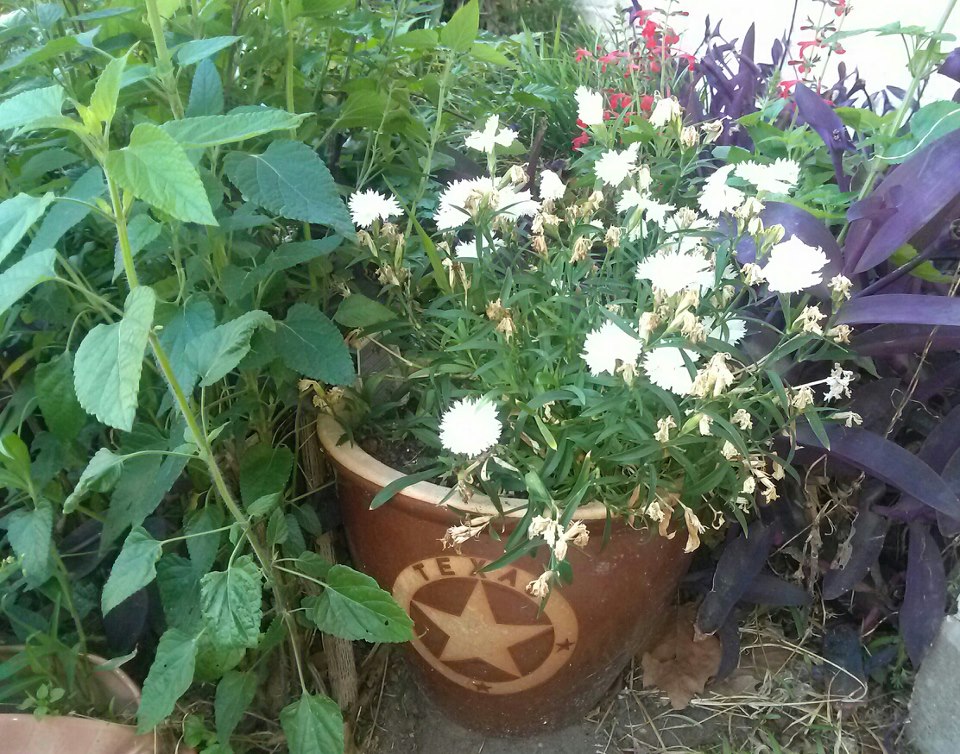
… Dreaming of Spring Gardening …..

Texas planter picture

Christine's avatar

Onions planted!

Seed Onions Planted February 2, 2014

Seed Onions to be Planted

In this area (USDA Zone 8b in Texas), onions can be planted at now

When preparing to grow onions in the garden:

  • Purchase onion varieties that will grow in your area. These onions (pictured above) were purchased from our local Co-OP. The two kinds of onions we planted are; Texas Legend (yellow onion) and Hybrid Southern Bell Red (red onion).
  • Check if the ground temperature range is 45 to 60 degrees (preferred temperature range for successful onion growing).
  • Remove weeds from the garden bed.
  • Plant onions about 6 inches apart and 2 inches deep in the soil.
  • Wait until the green tops fall over on the ground before harvesting.

The picture below illustrates that the white bulby part of the onion is not visible above ground.

Onion Planted Feb 1, 2014

Onion Planted Feb 1, 2014

Onion Trivia:  Long Day versus Short Day  Onions.

Select an appropriate class of onion for your region. In Southern states, the soil is sufficiently warm in February, so plant short day onion varieties. In the northern states, it will be at least late April until the soil temperature is minimally warm enough, so plant long-day onions.

Why? Spring days are shorter than Summer days — long day onions will not grow in the southern heat conditions (when day length is longer), so  in Southern states, plant early and use short-day onions for best growth during Spring/early summer.

Christine's avatar

Texas Weather Confuses Plants!

picture of broccoli head flowers

Flowering Broccoli–Jan 24, 2014

The motorists stranded in Atlanta due to snow and ice on the roads is a pretty good indicator about how well the South is prepared to deal with the infrequent occurrence of winter storm weather.

Conditions in Texas aren’t much better. It has been quite cold around here—and it’s not over yet–with some weather agencies indicating possible snow/ice are in the long term forecast for later in the first week of February–that’s not looking good for the groundhog!

In this area, we’ve gotten the cold winter storm conditions (lows in the upper teens, highs in the lower 30’s with ice/snow mixes) mixed with warm spring conditions (lows in the 40’s, highs in the 70’s) immediately followed by days of Spring the plants are quite confused!

Broccoli is a “cool” weather plant that performs best when temperatures are in the 60’s. In my garden, the broccoli is still growing, but the broccoli heads are very small—but still taste better than anything I can purchase at the grocery store.)
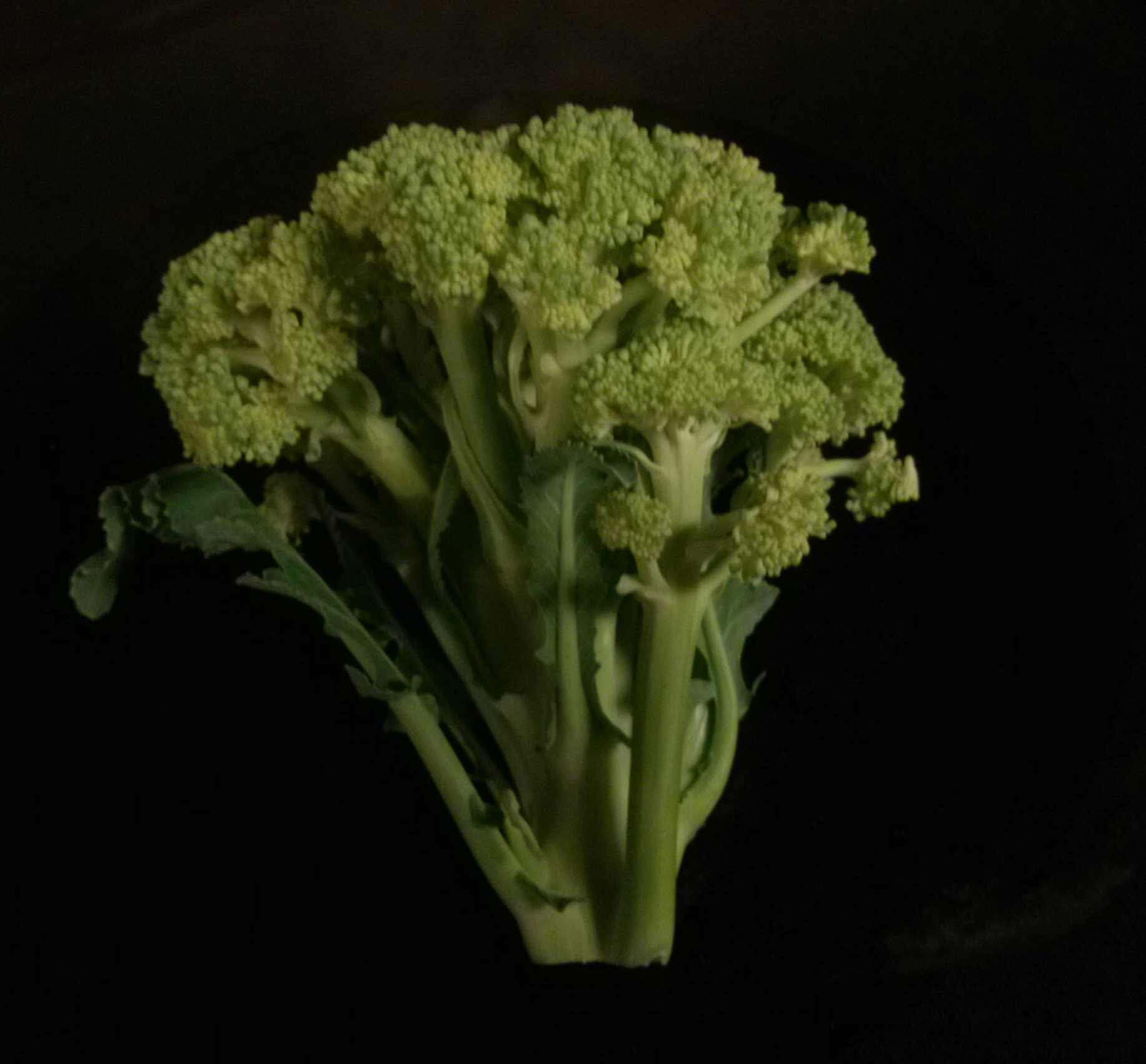
Normal appearing broccoli head with buds

Broccoli “buds”, Jan. 24, 2014

The broccoli part that is consumed consists of flower buds. Given warmer temperatures and increasing daylight hours, those buds will open to reveal the flowers (see yellow flowers, top picture.). Other plants in the garden (directly next to the flowering broccoli) are at different stages of development. Depending on the timing of weather conditions and maturity of individual plants, those broccoli have heads that are still buds (picture above).

Notice on the “normal” broccoli — the buds are very compact; whereas on the flowering broccoli–the buds are enlarged with flower petals.

Both forms are edible—the flowering plant will tend to be more stringy (fibrous, like celery strings) and tough even after cooking, so it’s a matter of choice.

Christine's avatar

Multiple Root Carrot

Because of the super moist Fall (combined with limited  time available for gardening), we were unable to work in the garden nearest the house (reserved for carrots, spinach and Fall green beans).

picture of multiple root carrot

Carrot Jan. 20, 2014

Last year, we planted carrots and had so many that some of them stayed in the ground long enough to make seeds that were scattered (by wind) onto the soil.

When carrot plants are not thinned out as young plants, they tend to interfere neighboring carrots’ growth and have odd shapes, or develop multiple roots if there is an excess amount of nitrogen. As a consequence, we’ve seen quite a few “odd” shaped carrots — this one (left) is the oddest so far.

Christine's avatar

Fresh Carrots!

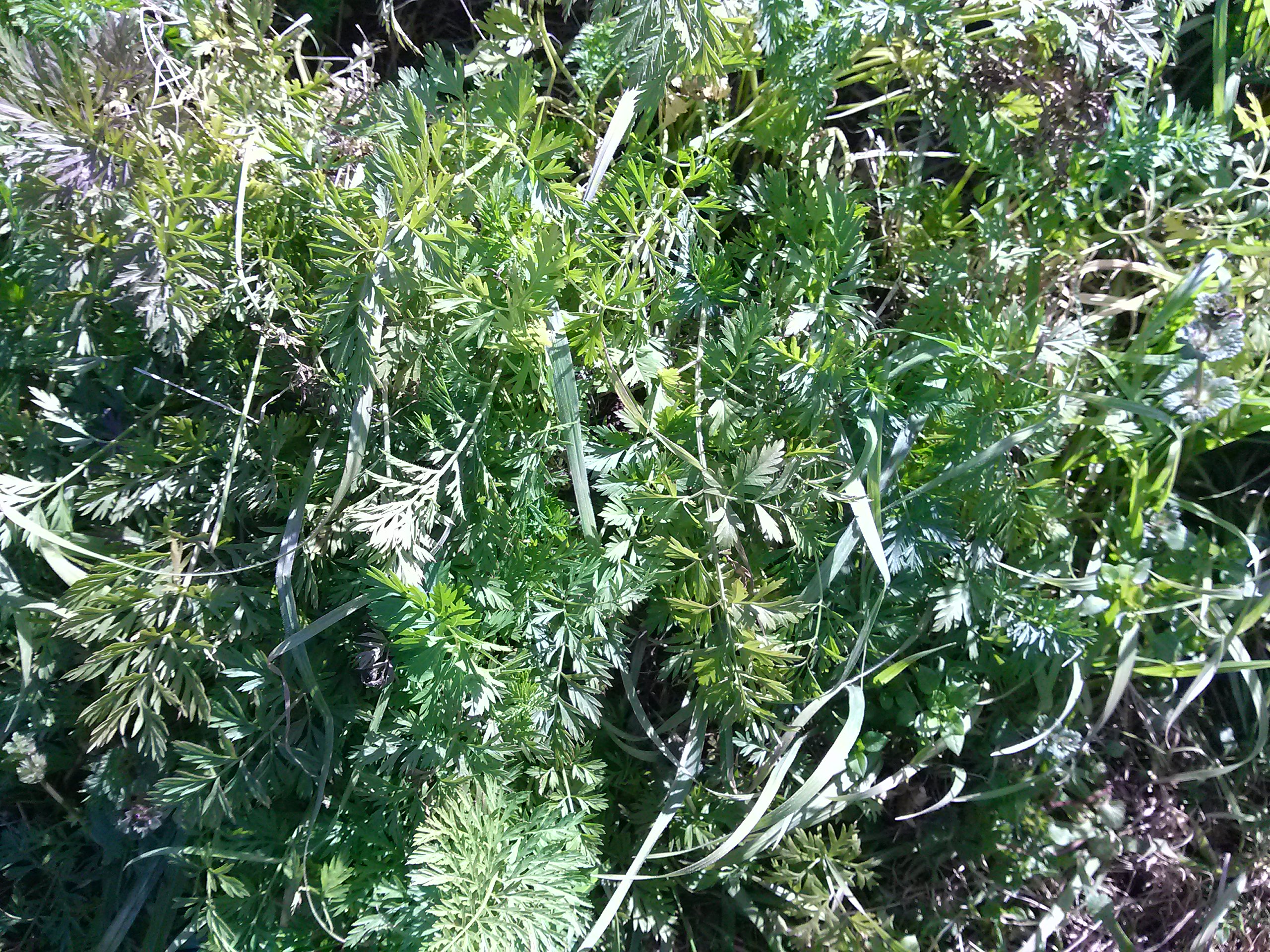
Finally, we have a picture-perfect weekend; no wind, lots of sun and a high temperature expected to be right about 70! I decided to check on the carrots in the garden. We did not plant any in the Fall due to the rain and excessively soaked ground, however, we do have carrots in the garden now.

picture of carrot tops

Carrot Tops–Jan 18, 2014

Last year’s weather was perfect for carrots — our garden produced about 30 pounds or so. The carrots were harvested in December, with a few in January. I let some of them continue growing until seed was produced–the seed apparently had no problem germinating without help from us!

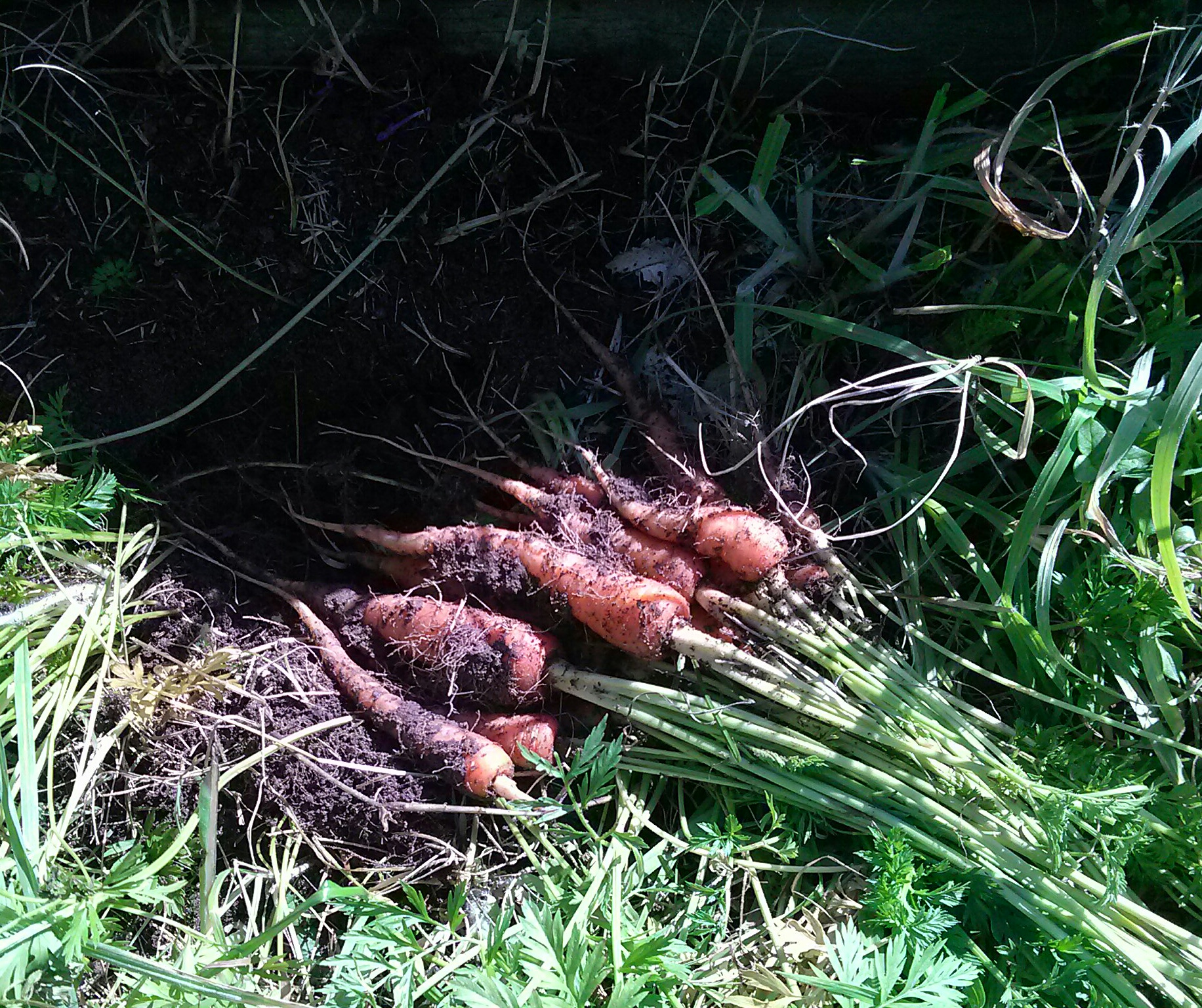
picture of carrots

Carrots from Carrot Tops Jan 18, 2014

The surprise was from the 10 inches of ground adjacent to the landscape timbers of our raised bed (yard just adjacent to garden).

The top picture shows carrot plant growth, the bottom picture shows the carrots that were pulled from the ground beneath the plants.

The carrots are all 4 to 6 inches in length, the largest diameter on a carrot is about 1.1 inches. Of course, we’ll have them for supper!