Posts by Christine

Christine's avatar

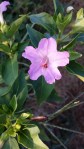
Is this Plant a Cypress Vine or a Cardinal Climber?

The pink blooms of the Star of Texas (Cypress) vine are abundant in summer.

“Star of Texas” (Cypress Vine) Aug.10, 2013

Cypress vines have star-shaped flowers and lacy green foliage. The flowers are about the size of a US dime, or roughly 1.3 cm across (about 1/2 inch). This care-free vine re-seeds itself and returns each year. Each flower lasts a day and each day the number of flowers increases until the first frost stops growth. This vine is ideal for those locations in the garden where summer color is desired—it quickly takes over an area with it’s green lacy foliage and numerous star-shaped flowers, then vanishes completely in winter (easy clean up and no pruning!)

Common names for Cypress vine are; “Star of Texas” or “Texas Star” — so named to represent the single star on the Texas flag. The pink-flowering vine—a pass-along gift from an in-law–is an icon in my garden.

A friend recently shared some seeds to a red-flowering cypress vine. The seeds were planted, sprouted, and produced small plants with large, thick palmate-shaped leaves. These seedlings did not have the familiar lacy foliage and they grew more slowly than the Cypress vine. Continue reading

Christine's avatar

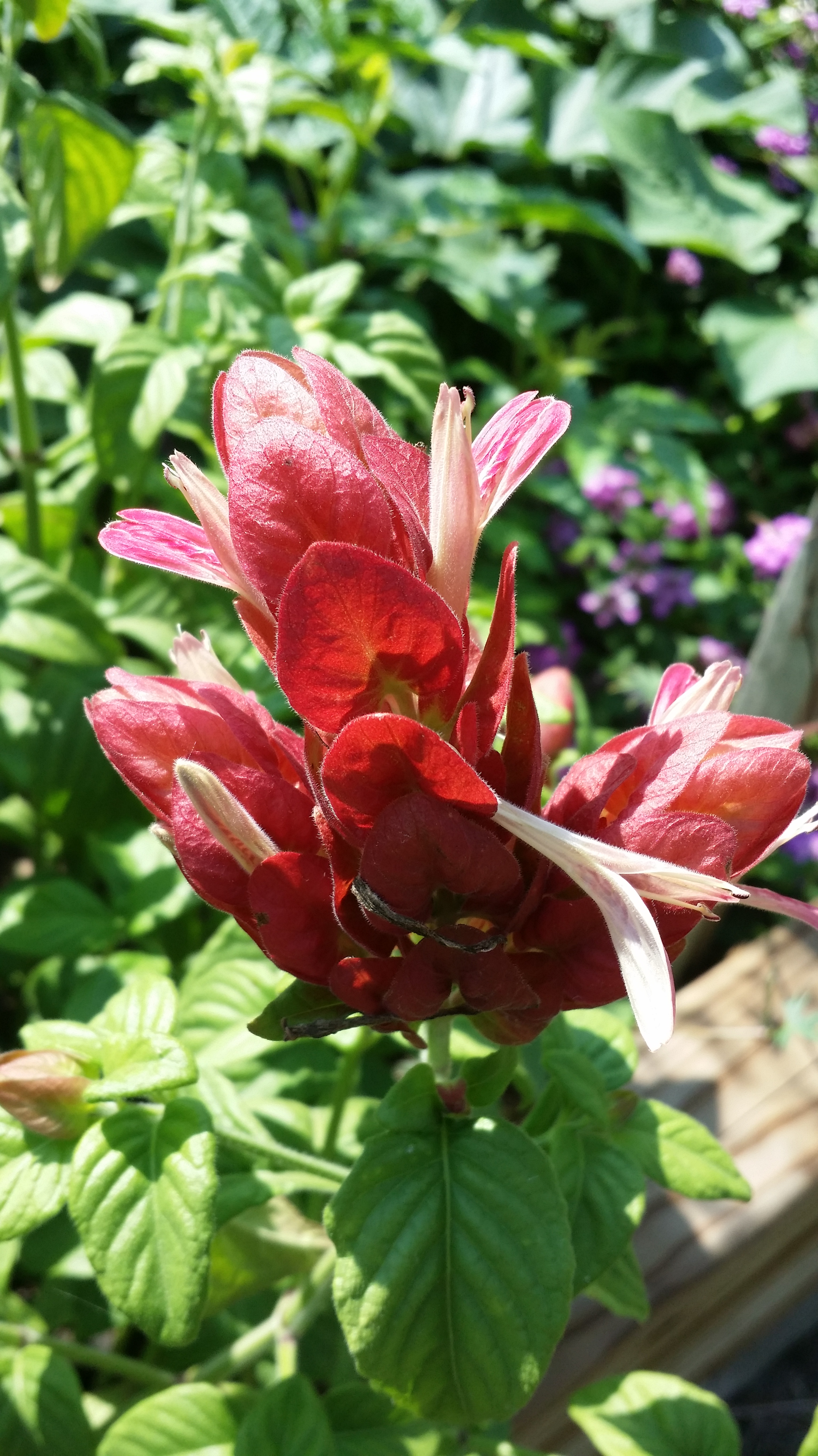
Shrimp Plant adds Color and Texture to Late Summer

Shrimp Plant blooming, Sept. 2014

Shrimp Plant, Sept. 2014

The Shrimp Plant (Justicia brandegeana) is native to Mexico, and well adapted for the conditions of Texas gardens!

I first acquired this plant as a “bonus” — a discounted price due to poor condition. It is very easy to grow:  provide full sun, water, and just wait for the salmon-colored flowers with parts that resemble clumps of shrimp.

With an above average amount of rain, and below average temperatures this year (Spring and Summer), the Shrimp plant is absolutely flourishing and creating brilliant colors (compared to the faded colors observed during the drought). Continue reading

Christine's avatar

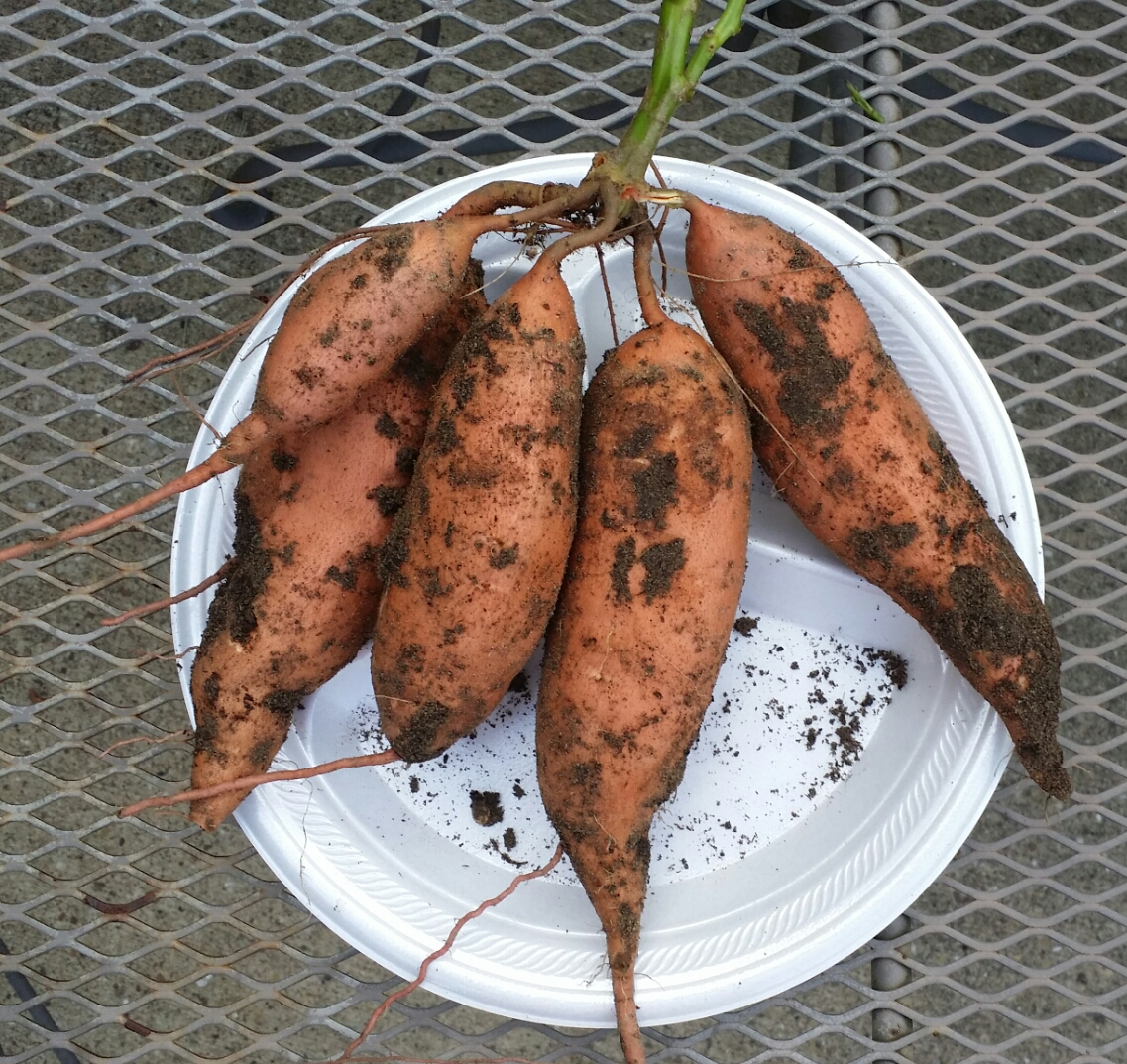
Fresh Sweet Potatoes from the Garden

Sweet Potatoe Tubers shown, Sept. 2014

Sweet Potatoes, Sept. 2014

Although sweet potatoes grow until frost kills the vines, I decided that it was time to see what I had growing in the garden.

Since this is my first attempt to grow these nutritious tubers, I am happily surprised to find these. Just to make sure I had at least a few, I planted about 30 slips (sweet potato vines).

So, there are about 29 more waiting to be harvested! I think I’ll let them grow until frost, then surely I’ll have a year’s worth! (The plate in the photo is 10.25 inches in diameter. )

These are truly a vegetable well-adapted for southern gardens! Sweet potatoes are planted in May and harvested at frost, after the vines die back and growth stops. This means the vines must endure the summer heat in Texas (and other southern states) as well as temperatures below ground that would normally cause white potatoes to rot.

These are the Beauregard variety. Now, to clean them up and prepare for supper!


Christine's avatar

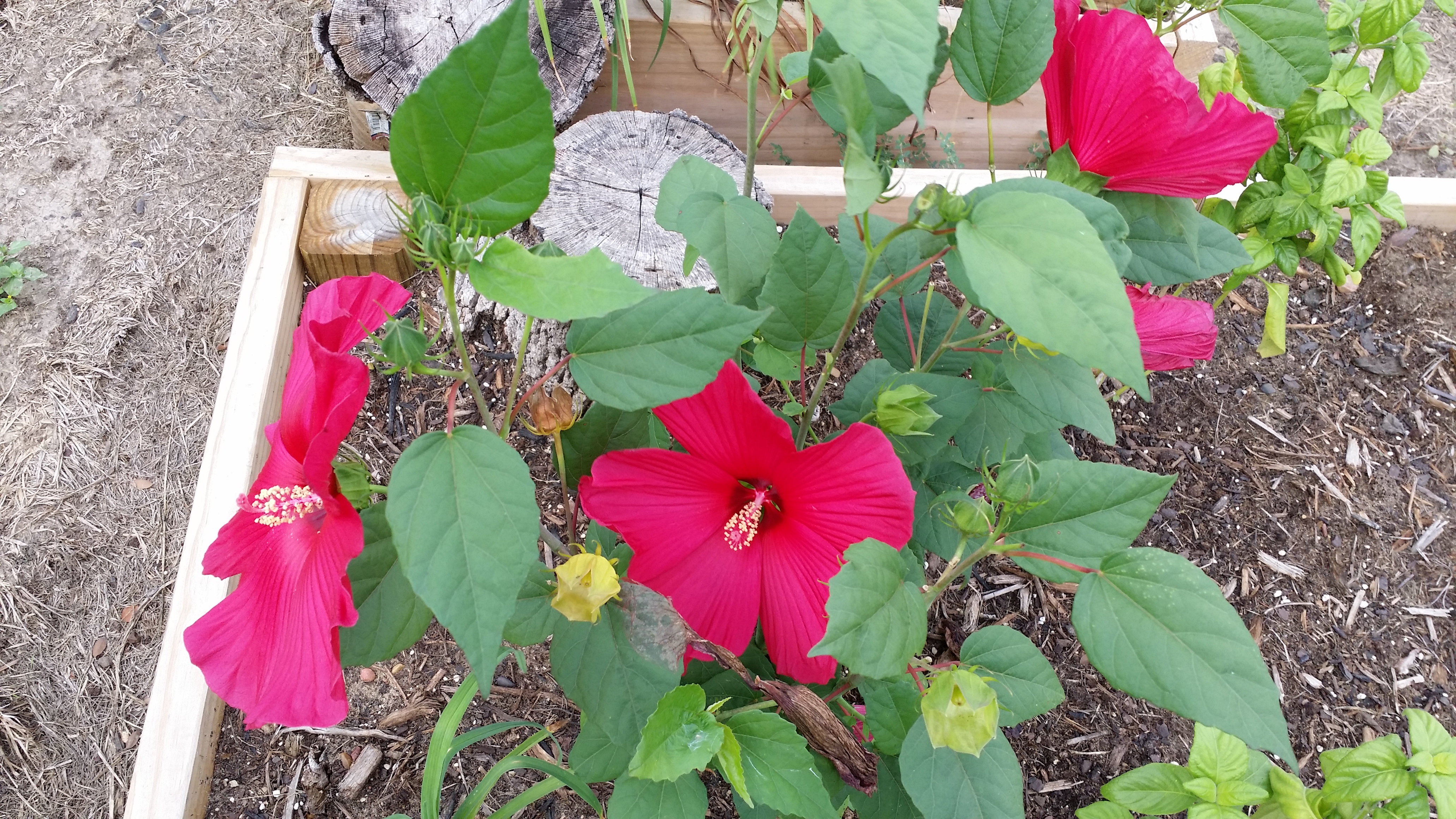
Hibiscus Plants and Summer to Fall Flowers

'Lord Baltimore' Hardy Hibiscus, flowers

‘Lord Baltimore’ Hardy Hibiscus, Sept. 2014

This year, there are two Hibiscus varieties in my gardens; the Hardy Hibiscus, ‘Lord Baltimore‘ (photo top left), and the Luna (Tm) Hibiscus, ‘Hibiscus moscheutos Luna‘ (photo lower left).

For years, the ‘Lord Baltimore’ has dependably returned; this year (after the drought experienced over the last several years), this hibiscus pushed up very few stems (a total of 6) from the established roots. Continue reading

Christine's avatar

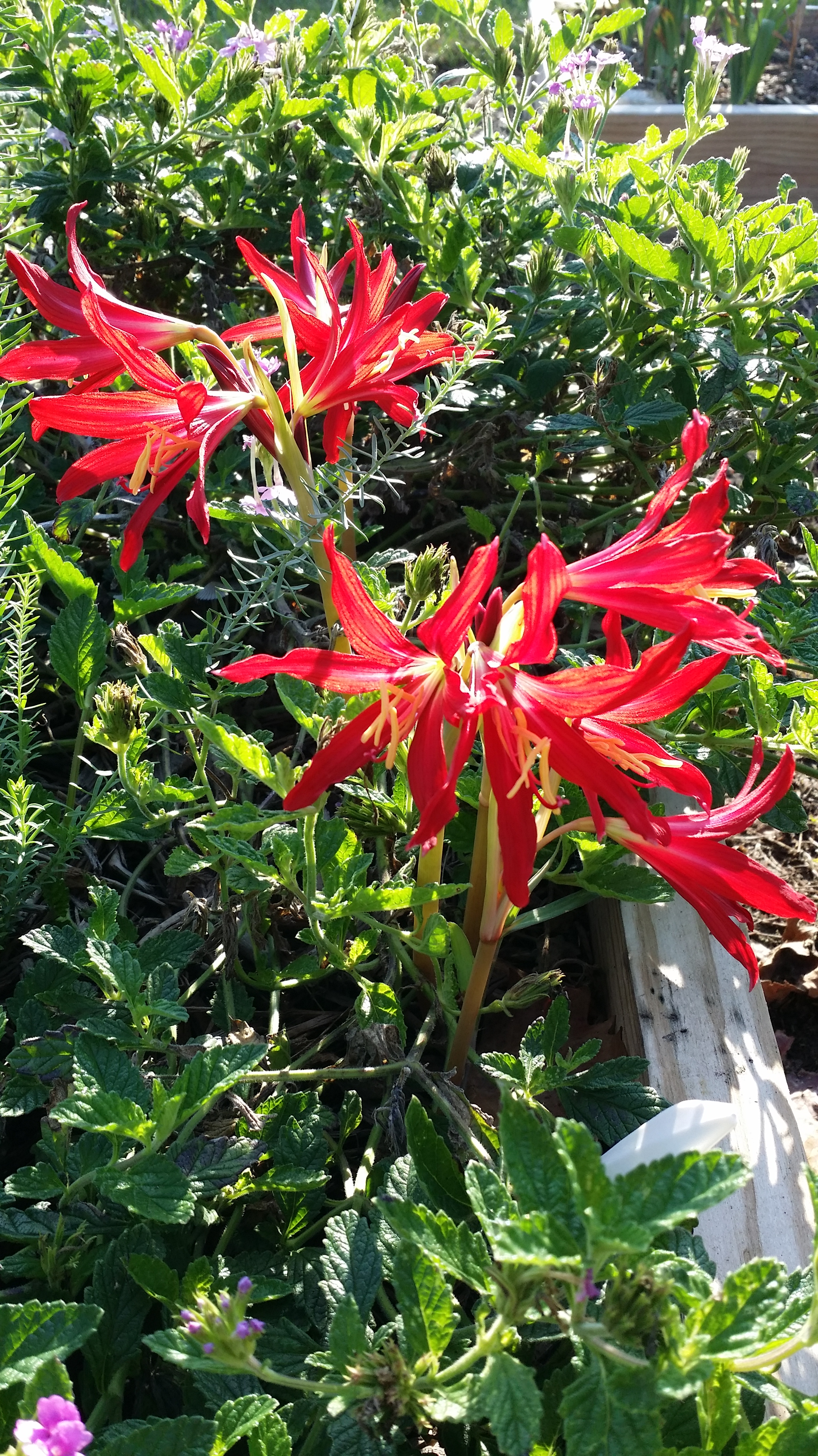
Oxblood Lilies Announce Fall is Eminent!

Oxblood Lilies Sept. 9, 2014; brilliant red amaryllis-like blooms

Oxblood Lilies

The arrival of the brilliant bright red oxblood lilies is always an invigorating sign — something very beautiful is blooming after the grueling Texas summer … AND … Fall weather is eminent (gone are the 100 degree days — although I gladly admit that we did not actually reach 100 degrees Fahrenheit this summer–very, very unusual!)

Nestled in an area overtaken by the purple verbena, these gems are nearly forgotten each year … until Fall approaches … then they are hard to ignore!

These flowers are from an heirloom bulb that is easily grown and passed along; Mine came from a good friend, and their arrival always invokes memories of a long history of friendship!

“Oxblood lilies” (Rhodophiala bifida) have a miniature amaryllis appearance; the stalks push up and produce the beautiful red blooms and the remaining foliage appears later — to gather the energy needed for survival over winter. They thrive in full sun and loose, well-drained soil — but are tolerant of a variety of conditions. I moved them from an area with morning shade and full afternoon sun to an area with morning sun that fades to shade in the late afternoon and the flowers have emerged about 1.5 times larger this year.

Now, I’m waiting for the rest of them to announce that the Texas summer heat is nearly over!

Christine's avatar

Four O’Clocks: The Marvel of Peru!

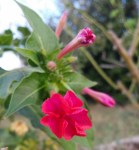
The four o’clock plants are an heirloom once grown by Thomas Jeffersen in the garden at Monticello — he referred to them as “the fragrant marvel of Peru”. After years of absence from my gardens, these gems are back — but only if I can convince someone to share seeds or plants with me.

So, I have 3 colors; pink (from my Mother — seeds and plants), Yellow (from one of my sisters — both seeds and plants) and red seeds from one of my In-Laws.

Despite the rise in temperatures to the upper 90’s, and a decrease in rainfall at the same time, these plants have begun to flower … and do so dependable each day.

Four O’Clocks are so named because the flowers open in the evening, remain open over night, then fade in the light of morning. Each bloom lasts a single day. The yellow and pink blooms last well into mid morning while the red blooms do not last long enough to be seen in morning’s light.

The Red flowers open red with wavy, red petals that reveal a magenta star when fully opened (pictured above). These were grown from seed and I’ll be looking for more from them (although I have to admit that I reserved some of the gift seeds — just in case these don’t make!)

In areas with loose soils and moderate temperatures, the plants create a large bulb, some up to the size of footballs (especially in the Yoakum, Texas area where they have occasionally overtaken volumes of pasture land!). When the bulbs do not form, an abundance of seed production ensures new flowers in the Spring. I collect the seeds, label and date them, then add them to my seed collection for the next year.

It’s after 4:00 now, local time. Soon, the flowers will be opening and revealing the fragrance once noted by Thomas Jefferson!

Christine's avatar

Texas Sage and Rain Lilies

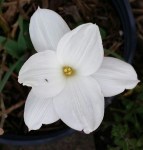
What do Texas Sage and Rain Lilies have in common? Both of these plants are drought tolerant, and they respond to rain (but in different ways)!

Texas Sage

The Texas Sage responds to pressure changes and is sometimes called a “barometer” plant. Falling atmospheric pressure often signals approaching rain. This plant produces prolific blooms each time rain is eminent — It has accurately “predicted” rain every time. The most welcome blooms appeared towards the end of the drought. Initially, we thought that the plant was not normal because rain was not even predicted. Yet, within 3 days (every time there are blooms) we have had rain. Texas Sage cannot predict the amount of rain, but there will be —at the very least— a light shower.  This year, we have seen more blooms than in the past 3 years combined!

Rain Lilies

Rain Lilies also respond to rain–but they don’t predict it. About 3 days after a rain shower, the flower buds emerge on the tips of stalks that reach about 8 to 10 inches. Most rain lilies are either Zephranthes or Habranthus species. Both of my rain lilies (the white and the pink) were obtained as pass along plants. While I believe the pink variety is a Zephranthes species, I suspect that the white variety may actually be Cooperia pedunculata — the giant prarie lily.

While both the Texas Sage and the Rain lily produce dependable blooms, the timing is really dependent upon rain.


Christine's avatar

How to Prepare and Store Pickled Cucumbers

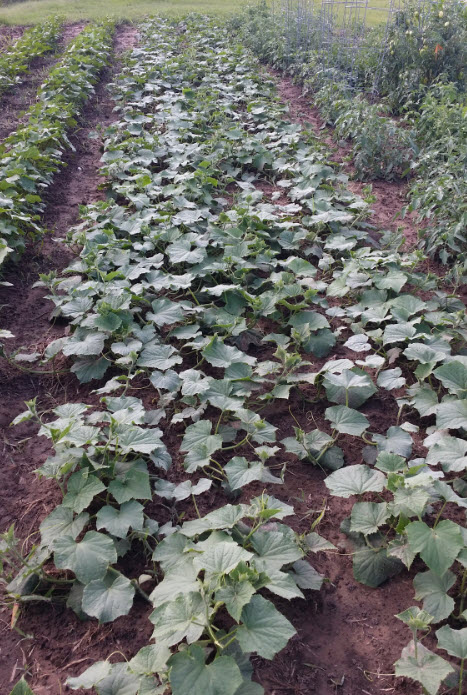
Cucumber Plants shown  in the garden  are "Market More", May 29, 2014

“Market More” Cucumbers, May 29, 2014

What a year this has been for cucumbers! The mild temperatures and frequent rains just encourage them to grow! This year, the first 2 sets of planted cucumbers were damaged by late frosts in May — our 3rd planting produced an abundance of these “Market More” variety plants. Continue reading

Christine's avatar

Callie

Toy Manchester Dog named Callie, August 11, 2014

Callie, August 11, 2014

It has been a difficult week. Anyone who has pets deeply embedded into family life knows that when that pet dies, it’s just like losing a family member. Callie came to us in 2001 as an energetic, full of life 4 year old rescue. What a personality she had! She was one of two “first dogs” for our son, so there are many many family memories tied her existence.

This picture was taken August 11. Callie died on August 12.

Callie became diabetic after receiving an excessive amount of steroids for a condition she was fighting off as a 5-year old. So, the daily routine of insulin morning and night became part of our routine—for 13 years. Once regulated with insulin, she was back to her vibrant, vigorous self! She took it all in stride … including the twice a day injections — followed by food of course!

She was a great companion in the garden, too. She kept an eye out for snakes and rodents, and promptly shooed them away.  She didn’t dig in the beds or damage plants–ever—she just enjoyed being outside and rolling in the sweet green grass, or the drought-singed hay grass—whatever was available.

She fought hard and never gave up, not even when the terrible seizures brought her to instances of near death… at least 5 times. We were out of town when the seizures started. She waited for us to return and greeted us with her usual full-body tail wag (at least as best she could move by then). Tumors in the brain, we didn’t know, then she went in a matter of days.

Dear little Callie girl, We will miss you and here’s just part of what we learned  from you:

1. Keep the bad things in short-term memory and the good things in long-term memory.

2. Get up every morning and stretch!

3. Follow the rules you impose on others.

4. Take care of those you love; watch out for them, help keep them safe from the dangers of this world.

5. Embrace every morning and every opportunity for joy.

6. Explore your world, you just never know what you will find.

7. Help keep the house clean! (She found bits and pieces of paper that she would pick up and bring to us. After receiving treats for such actions, she continued until her eye sight began to fade early this year.)

8. Eat healthy snacks (she loved carrots for treats — and they were “diabetes friendly”).

9. Take long walks in nature, it calms the restless mind.

10. Chronic illness is not enough to stop joy and happy times; make the most of EVERY day.

11. Always Always Always, openly and freely show how much your loved ones mean to you … every day … every time they return—even if it was just a trip to the grocery store or a short errand.

Thank-you, little Callie girl, for all the fun and happiness you brought to our lives. We will miss your bright spirit!


Christine's avatar

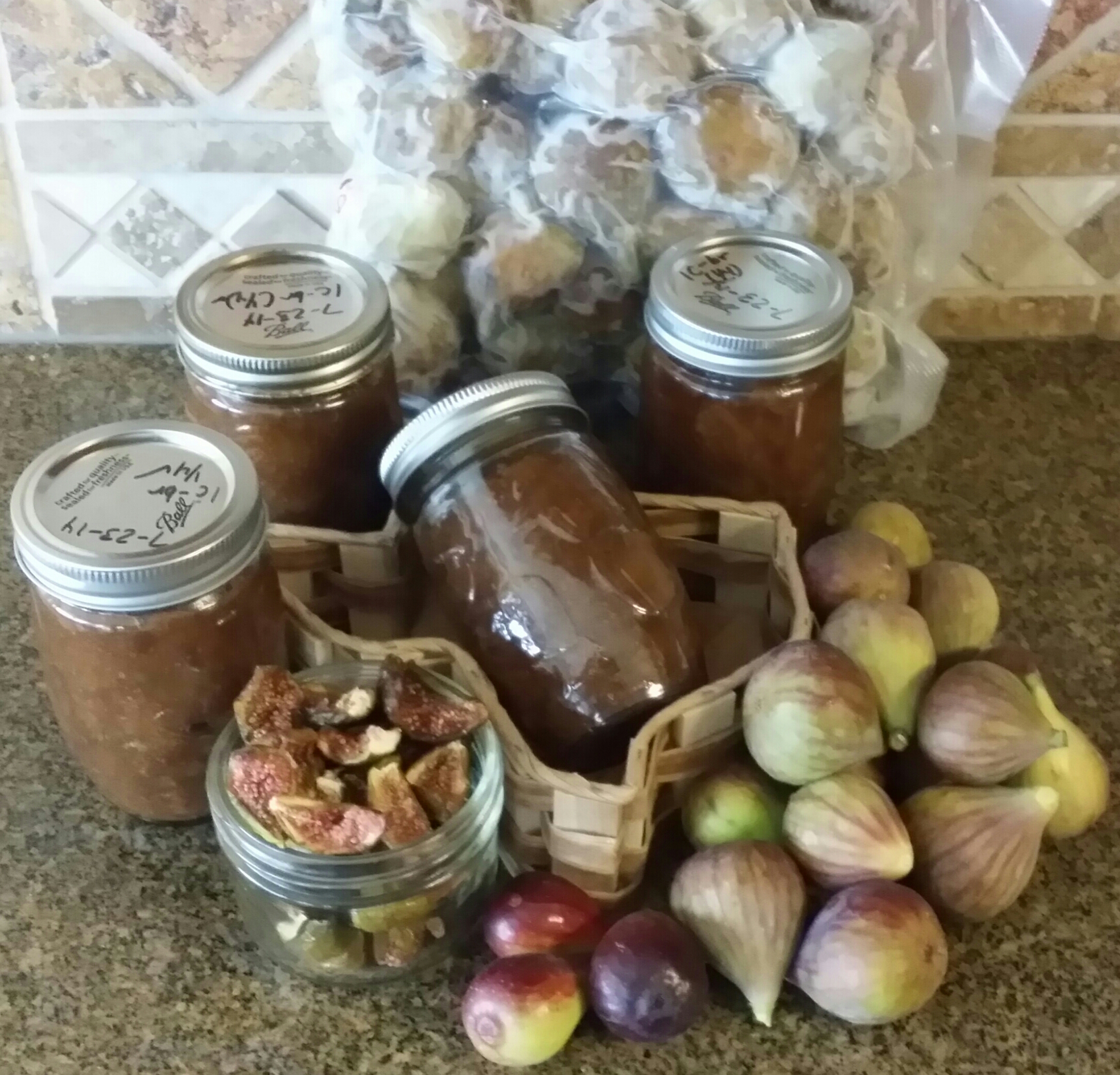
Ways to Store Figs

Shown are dried figs, frozen packaged figs, canned fig preserves, and fresh figs

Figs and Storage, July 2014

Fresh figs are quite a treat, but they are very perishable and strategies for storage is essential—especially when produced in abundance in a home garden, !

Figs can be stored frozen, or dried (in the small opened jar), or as canned preserves (see photo).

We have two fig trees an LSU Purple (the darker purple at the bottom, center of the photo) fig and Alma (to the right side, an Aggie product from  Texas A&M horticulture).

This year, there is an abundance of figs, but the cool, damp weather has caused the figs to ripen slower than usual. Continue reading